
Can a Dock De-Icer Protect a Boat Lift Through Winter?
The boat is out of the water, the dock is ready for winter, and most of the seasonal equipment has been packed away.
But the boat lift is staying in.
That raises an important question before freeze-up: can a dock de-icer help protect a boat lift through the winter?
Yes. A properly positioned dock de-icer can help manage ice formation around a boat lift that is designed to remain in the water. But simply placing a de-icer somewhere nearby isn't enough. Water depth, lift configuration, placement, local ice conditions, and the area you're trying to protect all matter.
First, Is Your Boat Lift Supposed to Stay In?
Before planning any winter protection, determine whether your boat lift should actually remain in the water.
Some lifts are designed to be removed seasonally. Others may be difficult or impractical to remove and remain in place throughout the winter.
Ontario's Occupation of Public Lands Regulation includes boat lifts among the waterfront structures found alongside docks, boat ports, ramps, and marine railways.
If your lift is designed for seasonal removal, a de-icer shouldn't be treated as a reason to leave it in.
If the lift is intended to remain in place, however, you need to consider what will happen around its frame and supports once the water begins freezing.
Why Is Winter Ice a Concern for Boat Lifts?
A boat lift can have several components sitting directly in the area where ice forms, including legs, posts, frames, cables, and other structural parts.
Ice conditions also don't remain exactly the same from the first freeze until spring.
Changing temperatures, water levels, currents, wind, and periods of thaw can affect the ice surrounding waterfront structures. When ice forms around part of a lift, subsequent movement can place stress on the structure.
Our guide to How Winter Ice Actually Damages Your Dock (And How a De-Icer Helps) takes a closer look at the forces created by winter ice and why structures left in the water can be vulnerable.
The same basic principle applies to a boat lift: if it remains in the water, you need to consider how ice will interact with it over the course of the winter.
How Can a Dock De-Icer Help?
A dock de-icer doesn't heat the water.
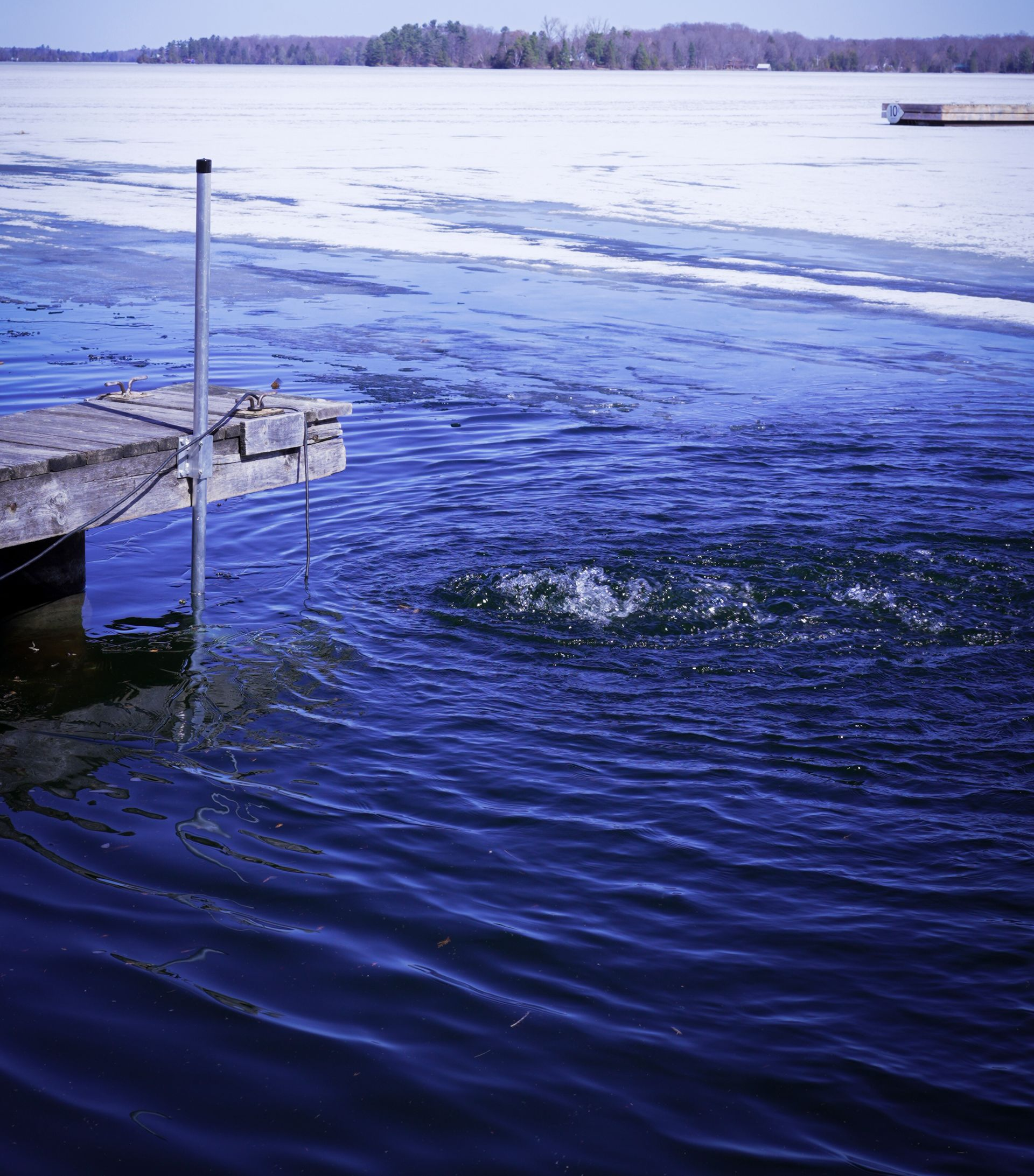
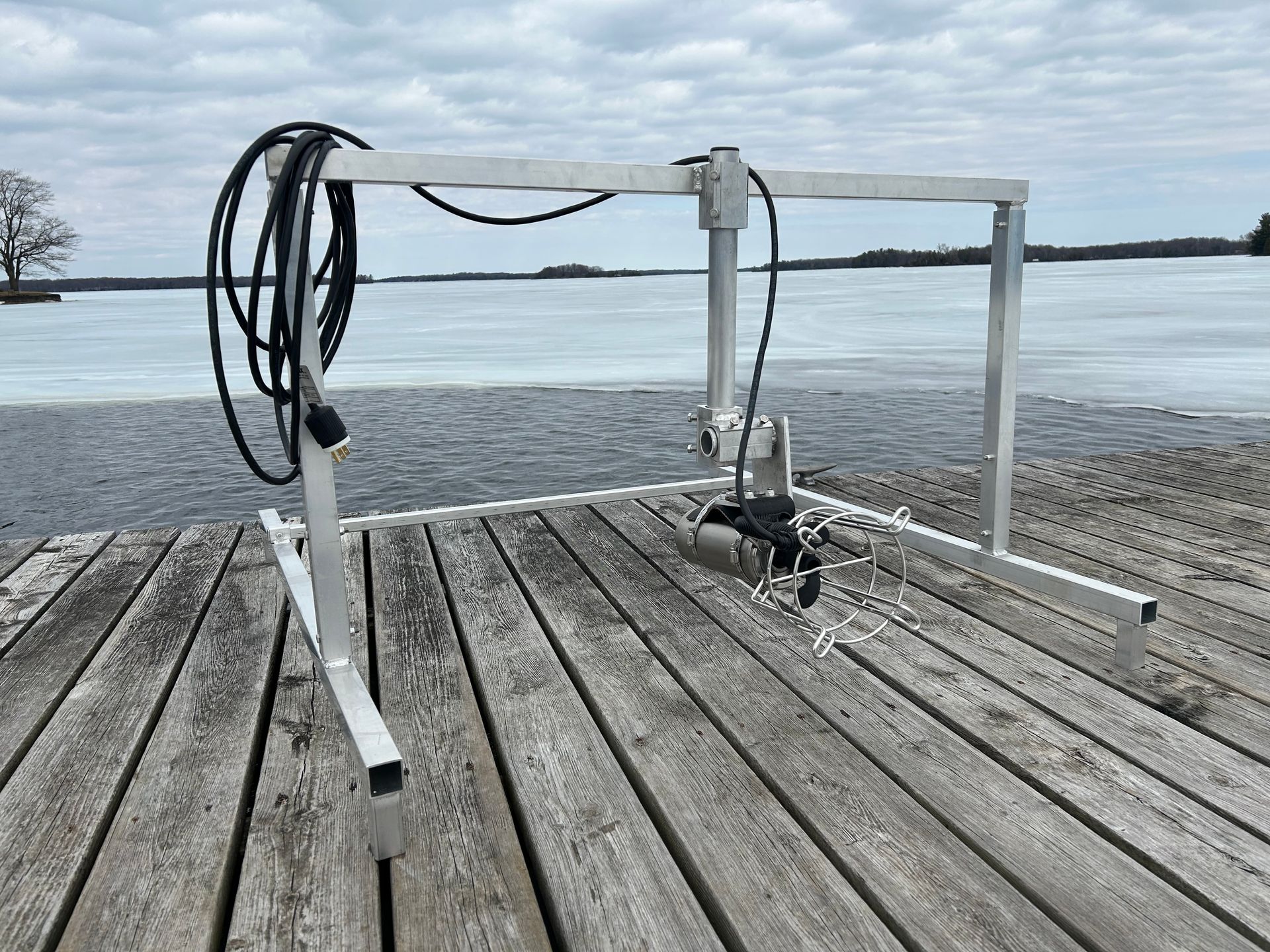
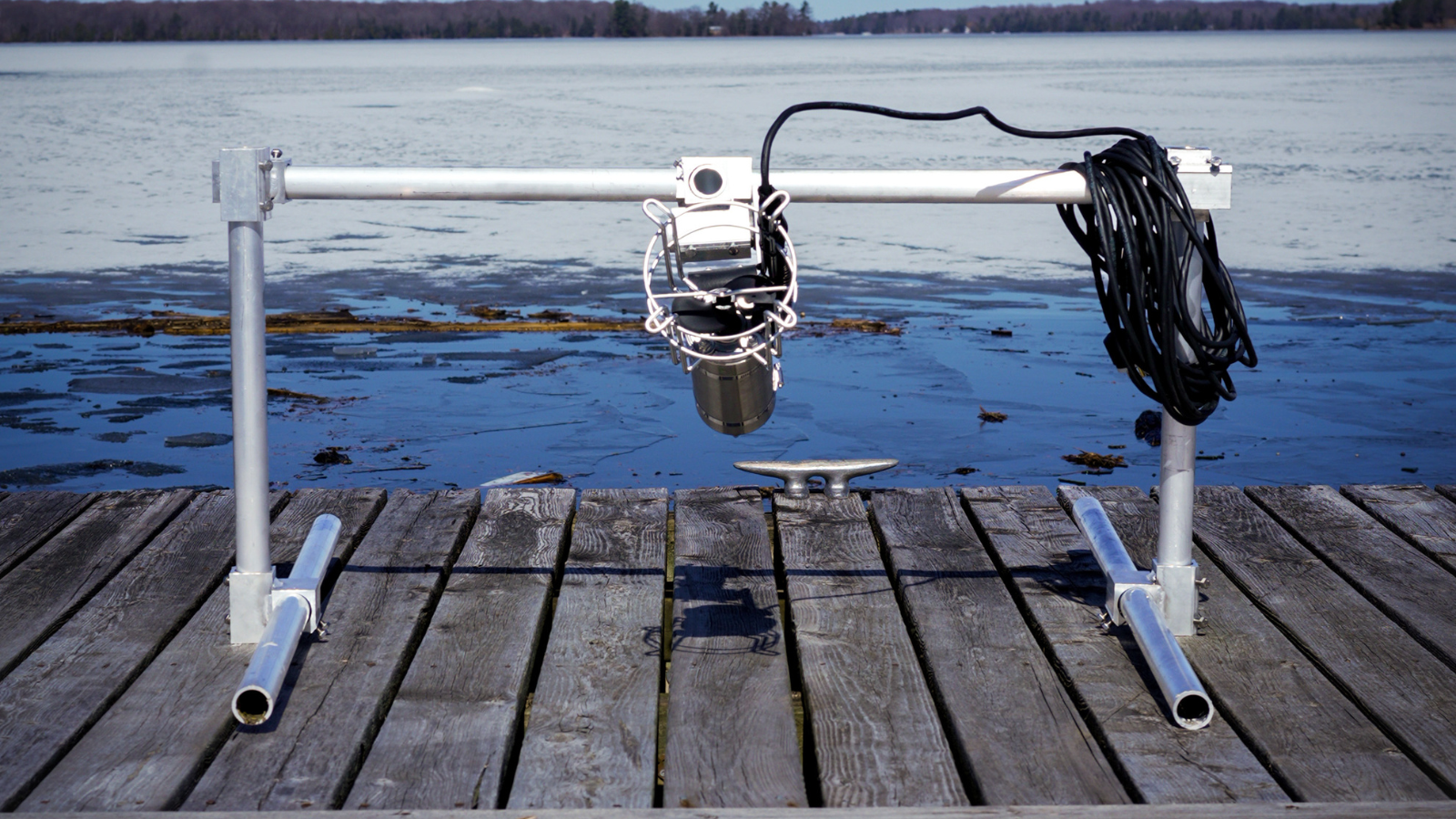
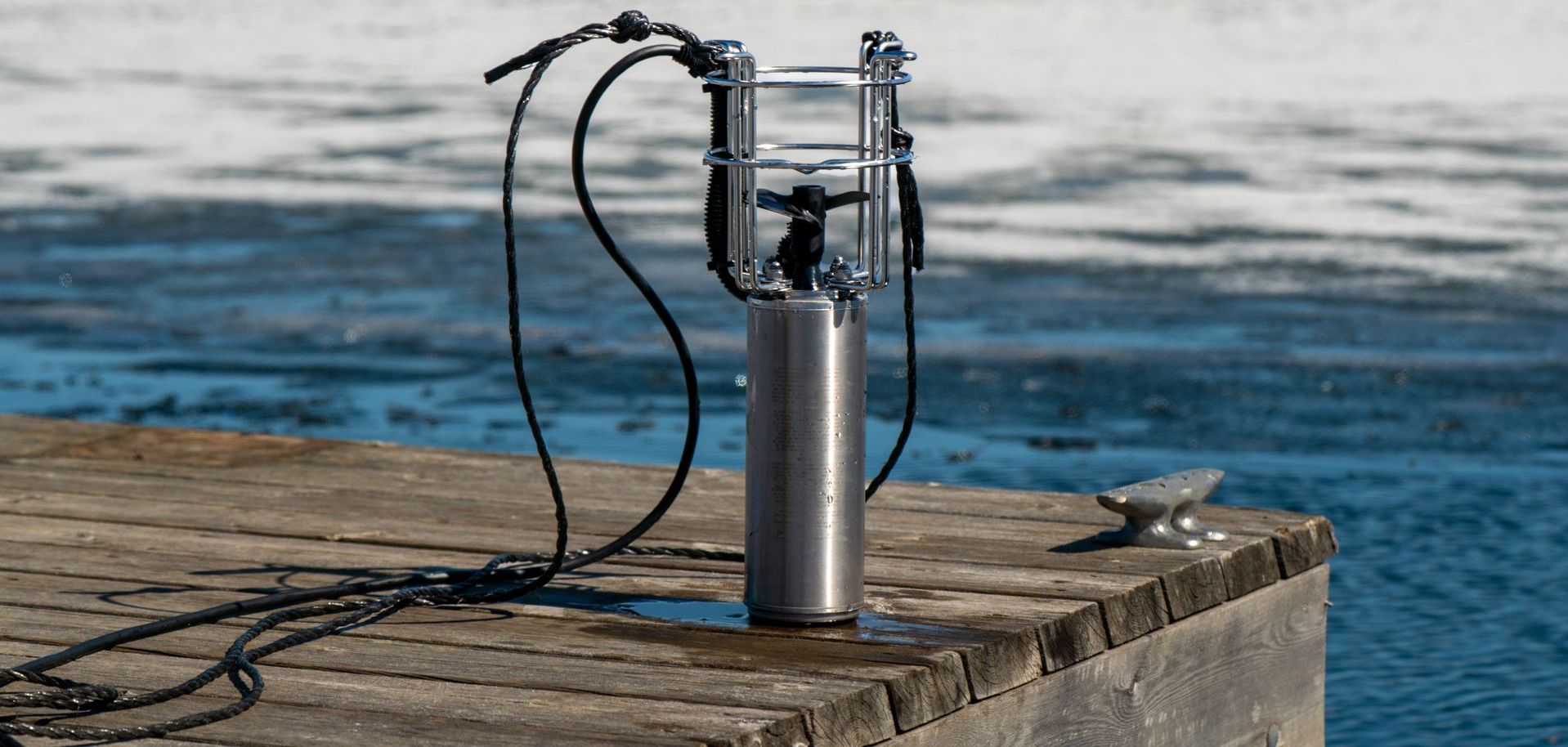
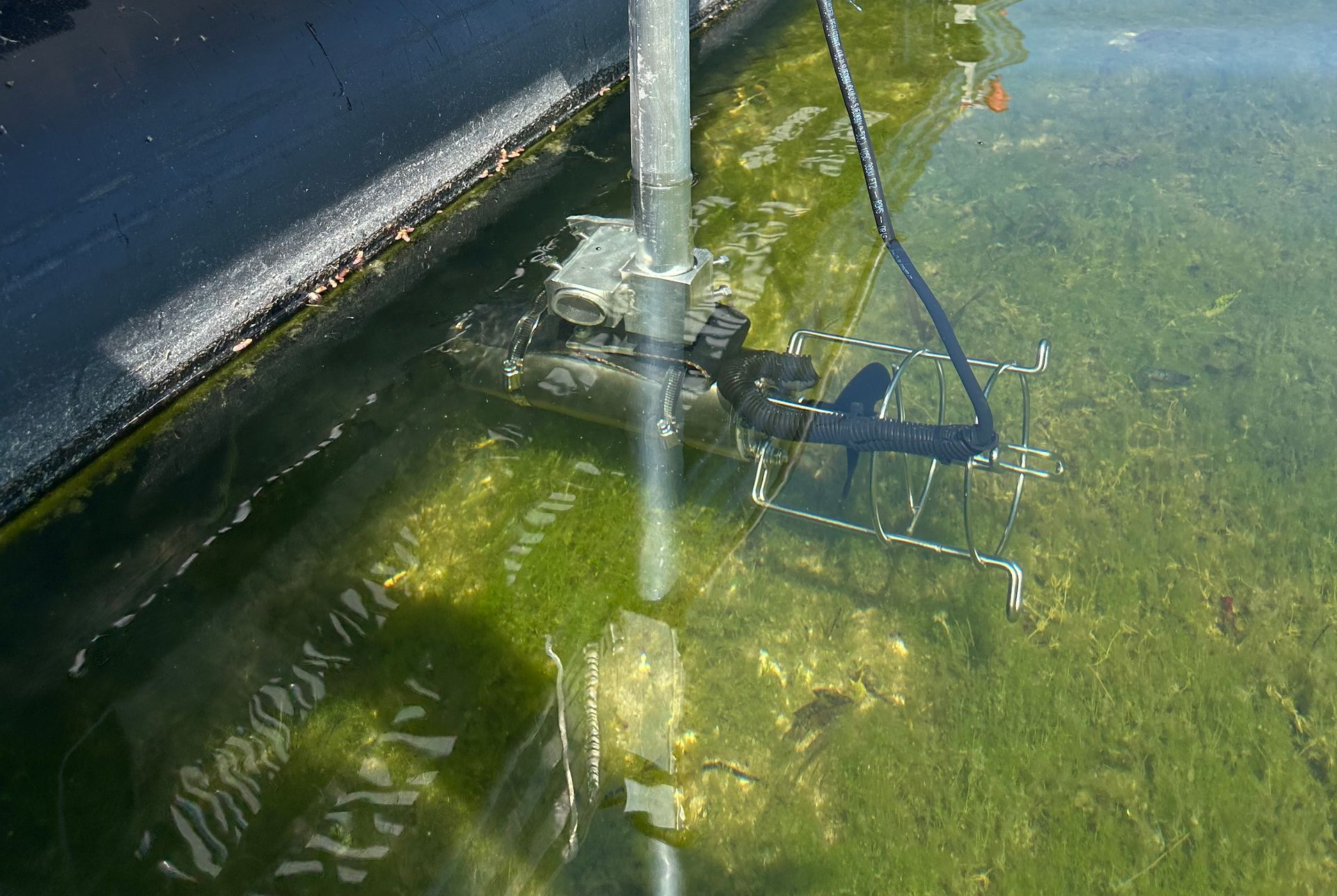
Instead, a propeller-driven unit moves deeper water toward the surface and creates circulation around the area you're trying to protect. This water movement can help reduce the formation of solid ice around the lift and its structural components.
Our De-Icer is designed for winter protection around docks, boat lifts, boathouses, and other waterfront structures.
The goal isn't necessarily to keep a huge section of the lake open.
For a boat lift, the more useful question is: where does the water need to move to help protect the parts of the lift that remain exposed to ice?
Placement Matters Around a Boat Lift
Boat lifts can make placement more complicated than an open section of dock.
The lift itself may have several legs or supports spread across a relatively large footprint. Its position in relation to the dock can also affect where a de-icer can be mounted and how water moves through the area.
Before installation, look at:
- The location of the lift's legs and frame
- Water depth around the lift
- Distance between the lift and dock
- Which components will remain below or near the waterline
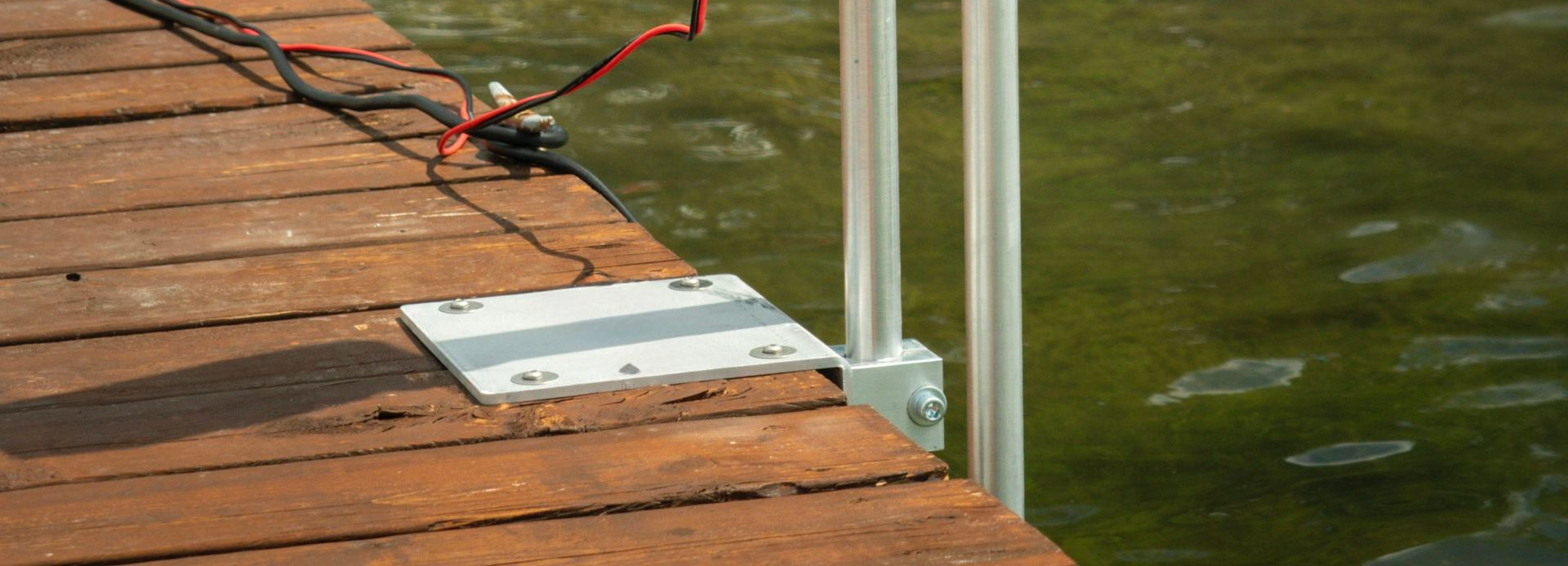
- Where the de-icer can be safely mounted
- The direction water needs to move
The objective is to direct circulation toward the area requiring protection rather than simply installing the unit in the most convenient location.
What If Your Boat Lift Is in Shallow Water?
This is worth checking before freeze-up because boat lifts are often positioned in water depths that differ from the rest of the dock.
For standard de-icing applications, the recommended placement depth for our De-Icer is approximately 4 to 6 feet. If your lift sits in shallower water, that doesn't automatically mean de-icing isn't possible, but it can affect how the system performs and how it should be positioned.
Our guide Do Dock De-Icers Work in Shallow Water? explains how available depth, placement, direction, and surrounding waterfront conditions affect a shallow-water setup.
Measure the actual depth around the lift rather than assuming it's the same as the water beneath another part of your dock.
Do You Need to Keep the Entire Boat Lift Ice-Free?
Not necessarily.
Creating more open water than you need isn't automatically better.
Your objective should be based on the parts of the lift and surrounding waterfront you're trying to protect. Depending on the size and configuration of the lift, that may mean concentrating water movement around particular structural components rather than trying to maintain a large open area.
This is another reason placement should be planned around the actual lift rather than using a one-size-fits-all setup.
Remember That Open Water Changes Winter Safety
If a de-icer is operating around your boat lift, ice conditions in that area can be very different from the rest of the lake.
The Canadian Coast Guard's ice safety guidance warns that ice conditions can vary and identifies moving water as one factor that can weaken ice.
The Canadian Red Cross similarly cautions that ice thickness can vary considerably and that currents, changing temperatures, and other conditions can affect its strength.
That matters around any operating de-icer. Open water and thin ice may extend beyond what is immediately obvious from shore, so the area should be treated accordingly throughout the winter.
Check the Lift Before Freeze-Up
If your boat lift will remain in the water, fall is the time to inspect it.
Look for loose hardware, damaged components, leaning supports, or anything else that may already need attention. A de-icer can help manage ice formation around the lift, but it doesn't correct an existing structural problem.
This is also the time to measure water depth, determine where the unit will be positioned, inspect mounting equipment, and decide which areas of the lift need protection.
Waiting until the lift is already surrounded by established ice makes all of those jobs more difficult.
So, Can a Dock De-Icer Protect a Boat Lift Through Winter?
Yes. If your boat lift is designed to remain in the water, a properly positioned dock de-icer can help manage ice formation around the structure throughout winter.
But the setup should be based on the lift you actually have.
Consider its size, configuration, water depth, mounting options, and the areas most exposed to ice. And if your lift is designed to come out each fall, follow the manufacturer's recommendations rather than using a de-icer as a substitute for seasonal removal.
The best time to make that plan is before freeze-up, while the lift is still accessible and you have time to position everything properly.