
Can You Leave a Dock De-Icer Running at a Cottage You Won't Be Visiting?
For a lot of cottage owners, the season ends on Thanksgiving weekend. The water gets shut off, the shutters go up, and nobody sees the place again until the May long weekend.
The dock, the boathouse and the boat lift stay behind, though. If they are going to spend the winter in the ice, a dock de-icer is one of the best ways to protect them. The question we hear most often is simple: can it run on its own all winter?
The short answer is yes. Arbrux de-icers are built for continuous winter operation with no regular upkeep. The longer answer is that an unattended setup deserves a little more planning than one you can check every weekend. Here is what we recommend.
Get the placement right the first time
When nobody is around to adjust things, the pump needs to be in the right spot from day one.
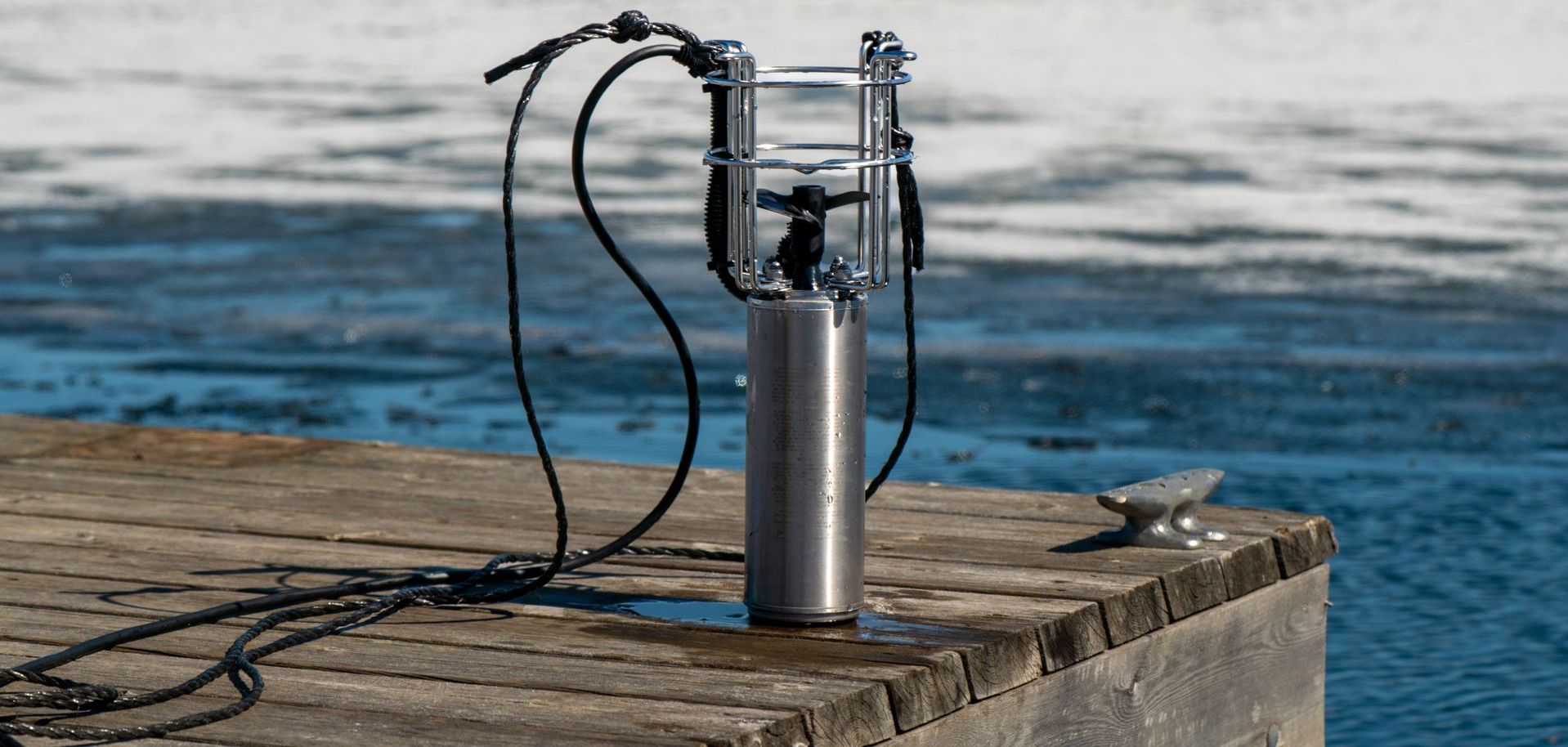
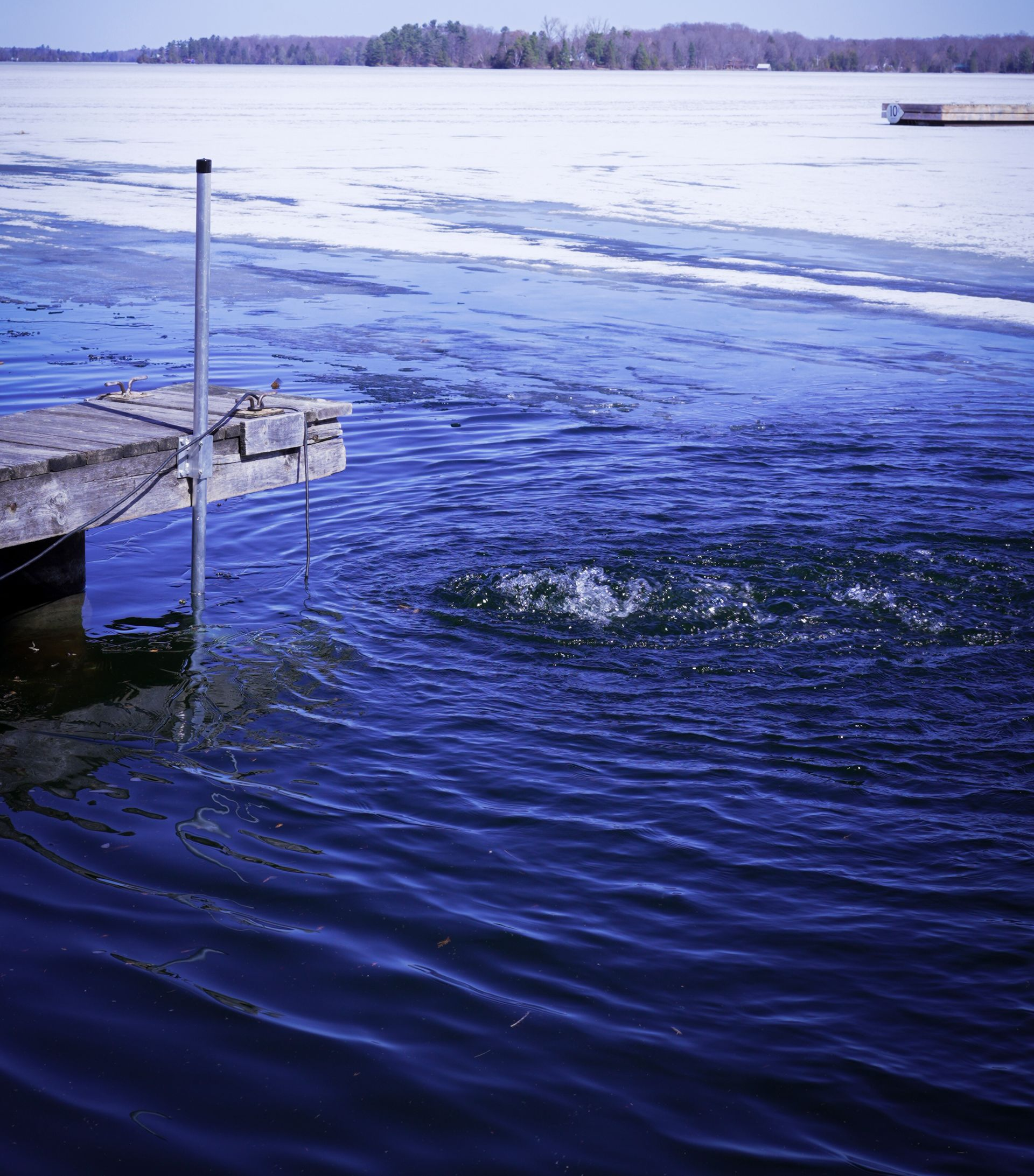
Place it 4 to 6 feet down, where it can keep a 40-foot diameter area open around the structures you want to protect. Aim the flow toward the dock, cribs or lift legs rather than out into open water.
If you are unsure about depth, measure before you close up. Water levels on many lakes drop through the fall, so a spot that looked deep in summer may be marginal by December.
Secure it properly
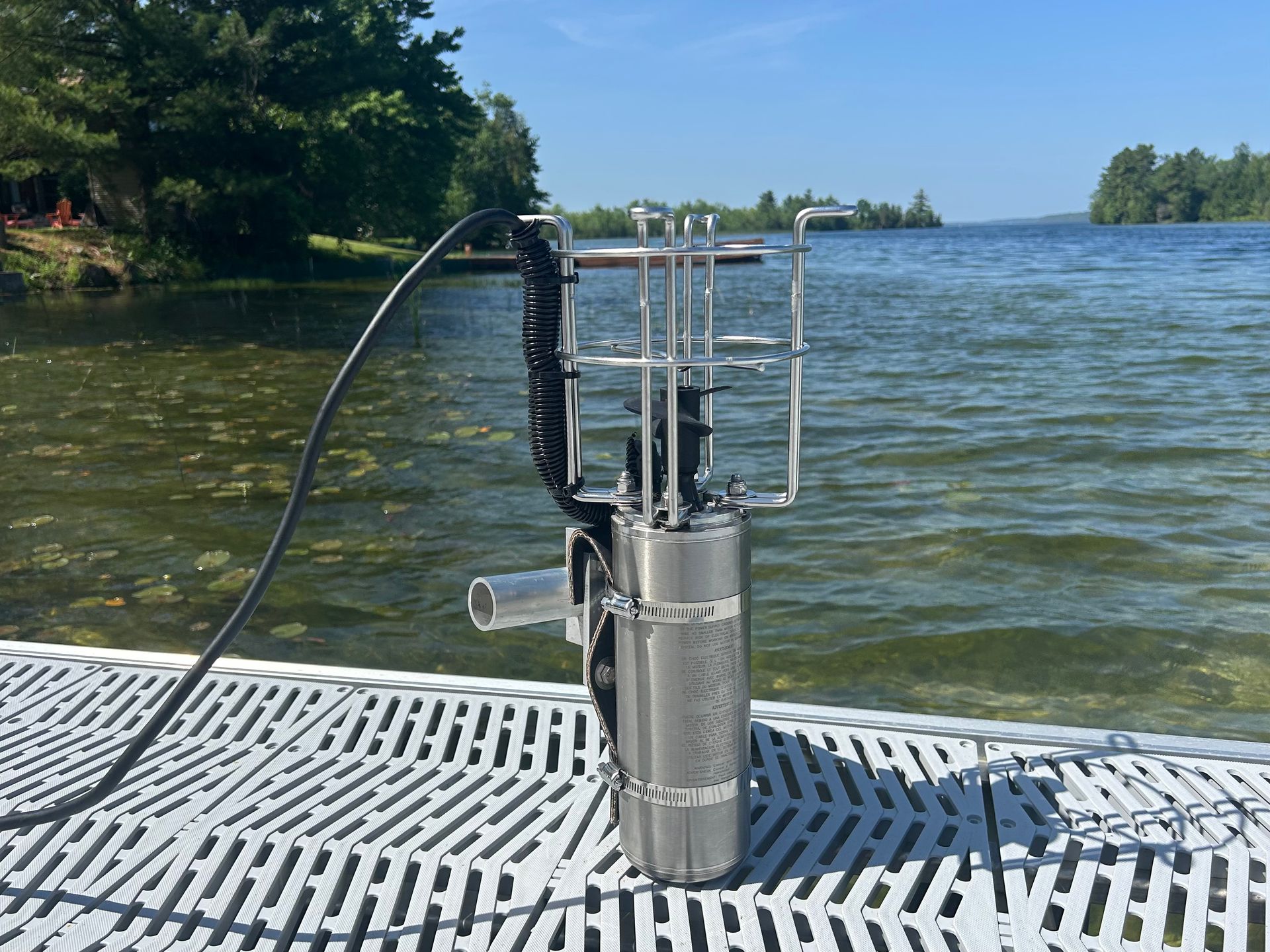
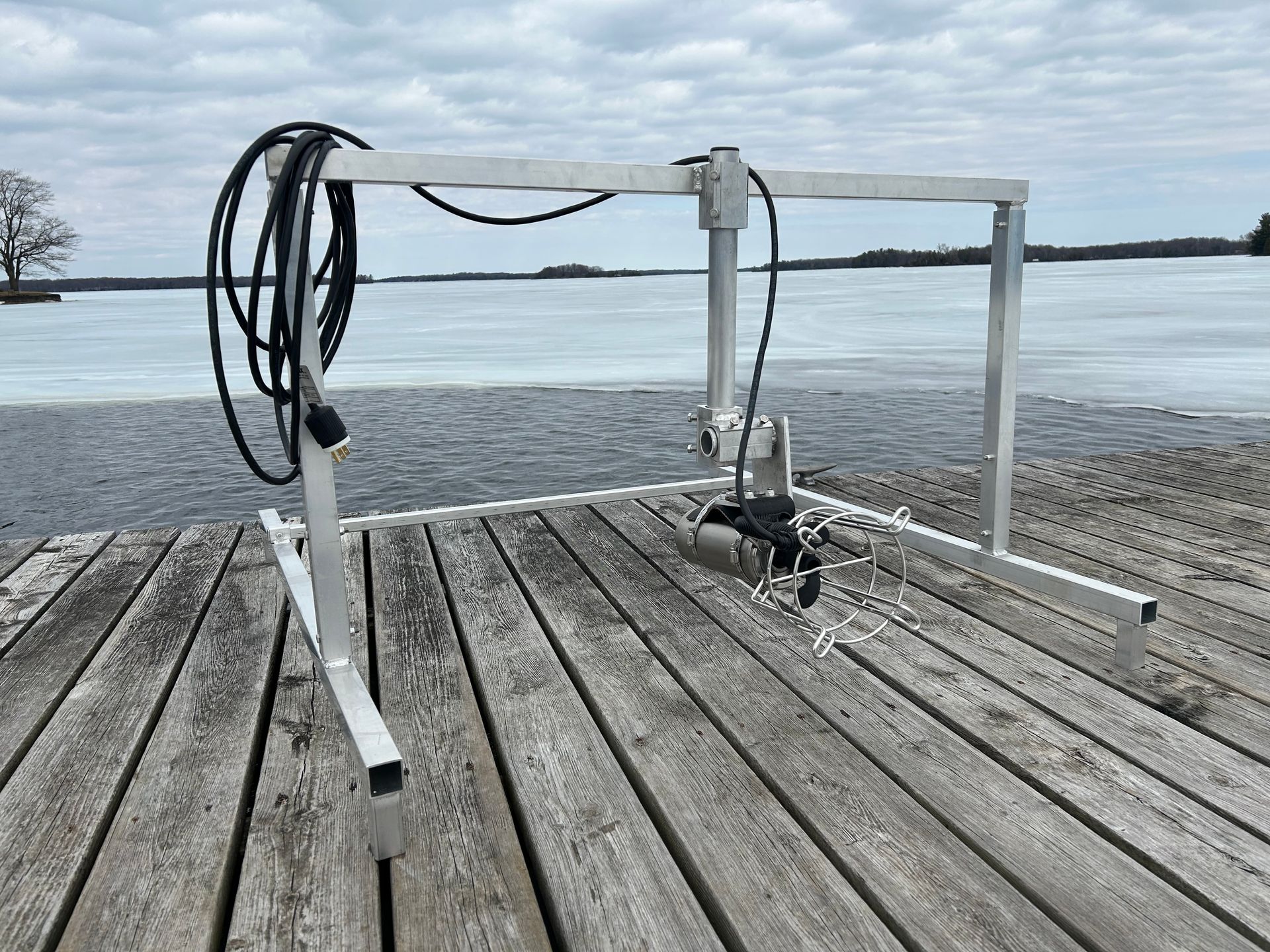
An unattended de-icer has to stay exactly where you put it. Use a proper mount rather than a makeshift rope hang.
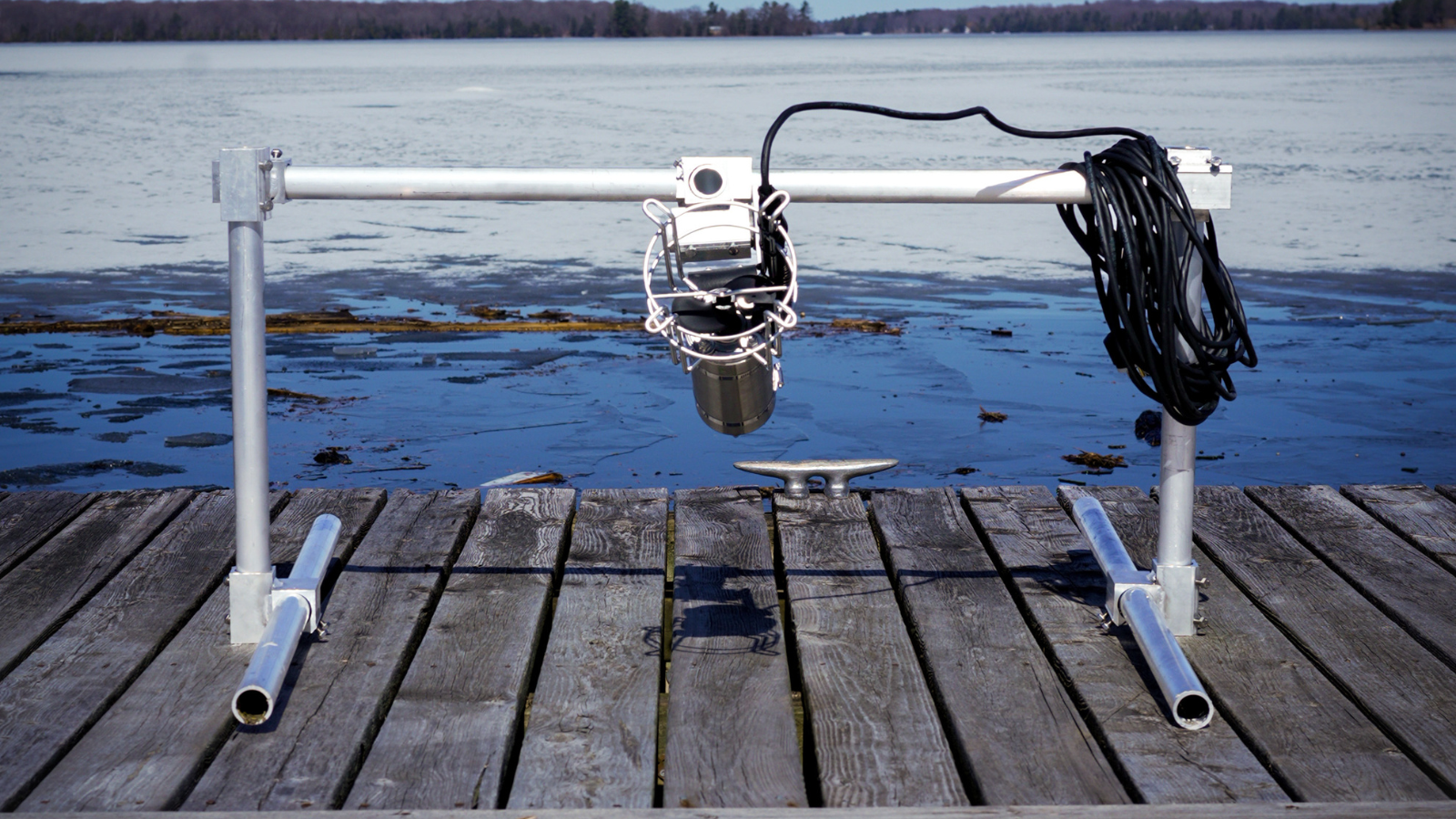
The Arbrux Dock Mount attaches to docks, pilings and walls and includes a pivot bracket so you can set the angle. The Lake Bottom Mount is a free-standing frame for spots with no dock to hang from. Every Arbrux pump also comes with mooring ropes for an extra point of security.
Plan for reliable power
Your de-icer can only protect the dock while it has power. Before you leave:
- Plug it into a dedicated, properly rated outdoor circuit with ground fault protection, installed by a licensed electrician.
- Make sure the cable is routed where ice, snow load and animals cannot damage it.
- Know how your area handles winter power outages. In a long outage, ice can start to form, so it is worth having someone check after a big storm.
Wondering what it costs to run? We break it down in How Much Does a Dock De-Icer Cost to Run All Winter?
Ask someone to keep an eye on it
Even a maintenance-free setup benefits from a second set of eyes. A neighbour who stays year-round, a property caretaker or a local marina can check that the water is still open after a cold snap or a storm.
A quick photo from the shore once or twice a month is usually all it takes for peace of mind.
Take ice safety seriously
This part matters most when you are not there to warn people yourself. Open water near your dock means thin ice around it, and people on the lake may not expect it.
- Post clear, visible signage on the shore and the dock.
- Let your neighbours and any local snowmobile or ice fishing groups know a de-icer is running.
- Check if your lake association, municipality or province has rules or guidance about de-icers.
- Give your insurance provider a call so they know how your waterfront is set up for winter.
Do a test run before you lock up
On your last visit, plug the de-icer in and watch it run for a few minutes. Check that the water is moving where you want it and that nothing is rubbing or catching.
It takes ten minutes, and it means you can drive away knowing your setup works.
Close up with confidence
Arbrux de-icers are made in Canada, UL and CSA certified, and backed by a 2-year warranty. They are designed to run all winter with no regular maintenance, so you can protect your waterfront from a few hours away.
If you would like help planning an unattended setup, our team can walk you through it.