
Do Dock De-Icers Work in Shallow Water?
Your dock sits in relatively shallow water, and winter is coming.
You've seen how a dock de-icer works. It moves deeper water toward the surface to help prevent ice from forming around docks, lifts, and other waterfront structures. But that naturally raises another question:
What happens when there isn't much deep water to work with?
Dock de-icers can be used in shallower waterfronts, but water depth matters. Shallow water can change both ice conditions and how effectively a de-icer circulates water, which makes proper placement especially important.
Why Does Water Depth Matter?
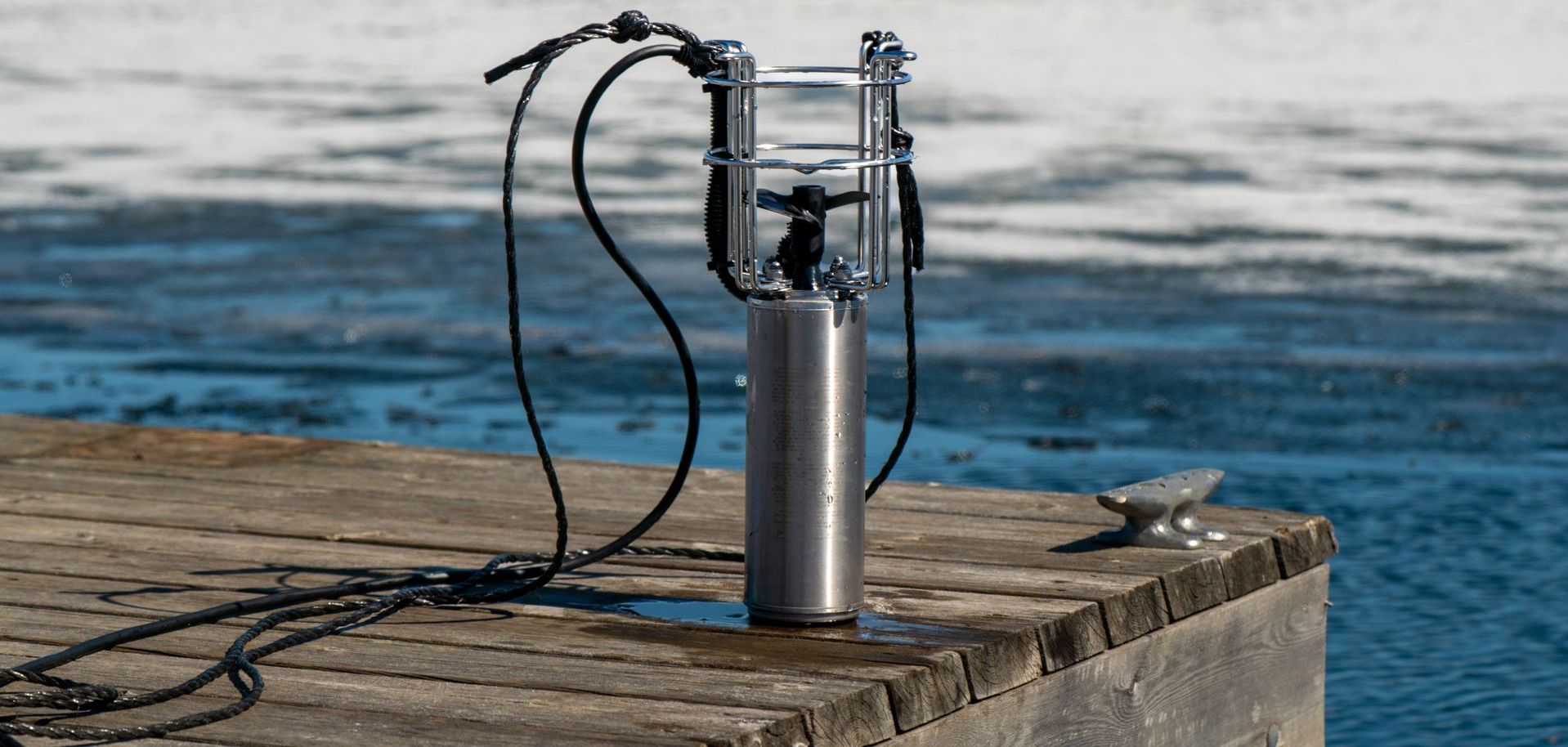
A propeller-style dock de-icer doesn't heat the water.
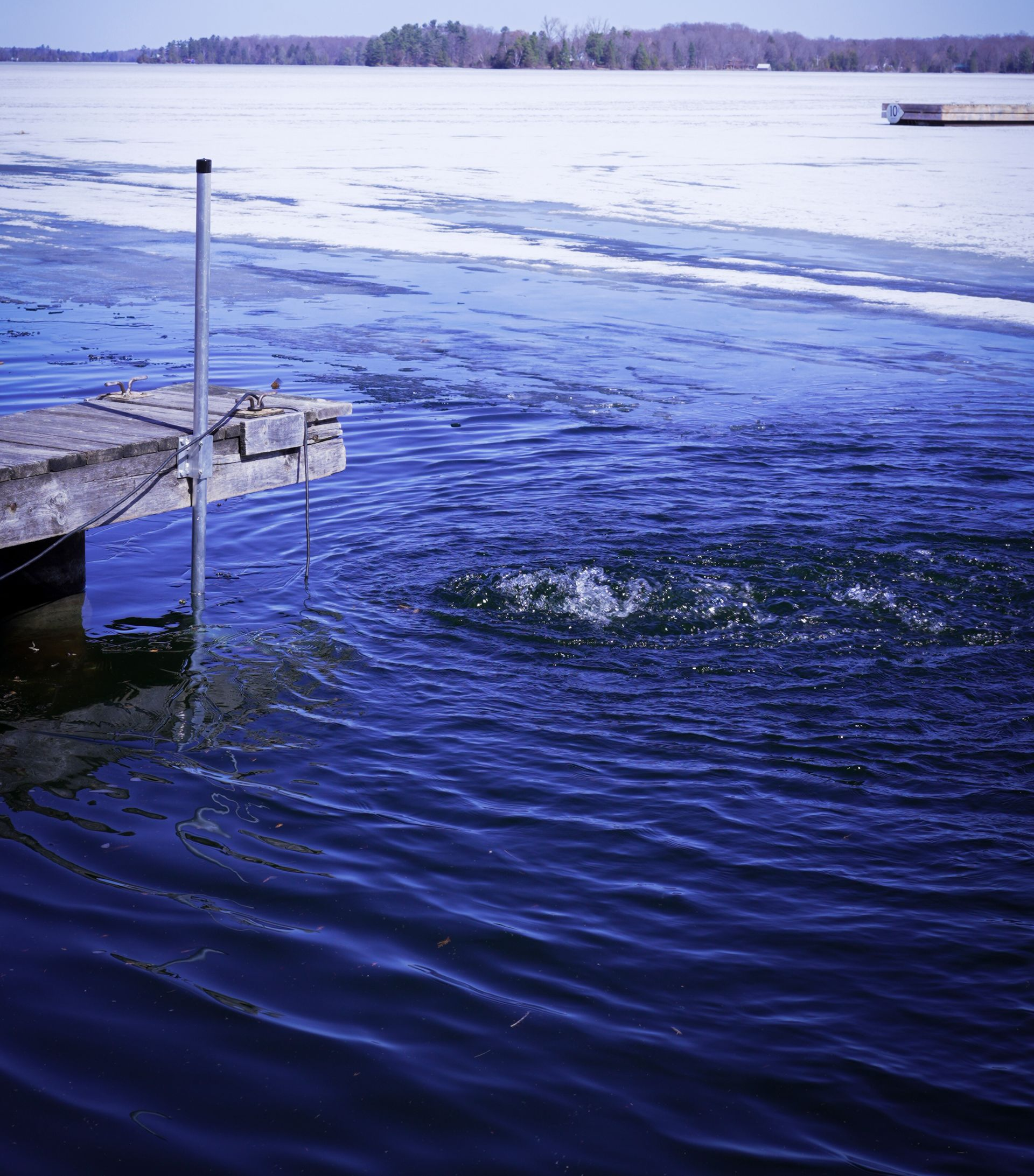
Instead, it moves water from below the surface upward and around the structure you're trying to protect. For standard de-icing applications, the recommended placement depth is approximately 4 to 6 feet.
That makes available water depth an important consideration before installation.
If your dock sits over relatively shallow water, you need to look at more than the distance between the lakebed and the surface. The position and angle of the unit also influence where that moving water goes.
If you're still determining the right unit for your waterfront,
How to Choose the Right Size Dock De-Icer for Your Waterfront goes deeper into the role water depth plays in system selection.
Shallow Water Freezes Differently
You've probably noticed this naturally at your waterfront.
The first ice often doesn't appear evenly across the entire lake. Protected and shallower areas can begin changing while deeper or more exposed water remains open.
Environment and Climate Change Canada's information about Great Lakes ice climate normals shows how water depth, temperature, wind and other conditions contribute to differences in winter ice development.
That's important when evaluating a shallow dock because your de-icing setup needs to respond to the conditions immediately surrounding the structure, not simply the conditions farther out on the lake.
How Shallow Is Too Shallow?
There isn't one depth that answers this question for every waterfront.
For standard applications, 4 to 6 feet is the recommended placement depth. Shallower installations can still be possible, but they may require a different approach depending on local conditions and the area you're trying to protect.
If your available depth is below the recommended range, that doesn't automatically mean a de-icer isn't an option. It does mean you shouldn't expect the same performance as an installation with greater depth.
This is where assessing your actual waterfront becomes important.
Placement Becomes Even More Important
When depth is limited, directing the available water movement toward the right area matters.
Instead of thinking only about where you can physically attach the unit, consider where the flow needs to travel.
You may be trying to protect:
- Dock legs or pilings
- A crib structure
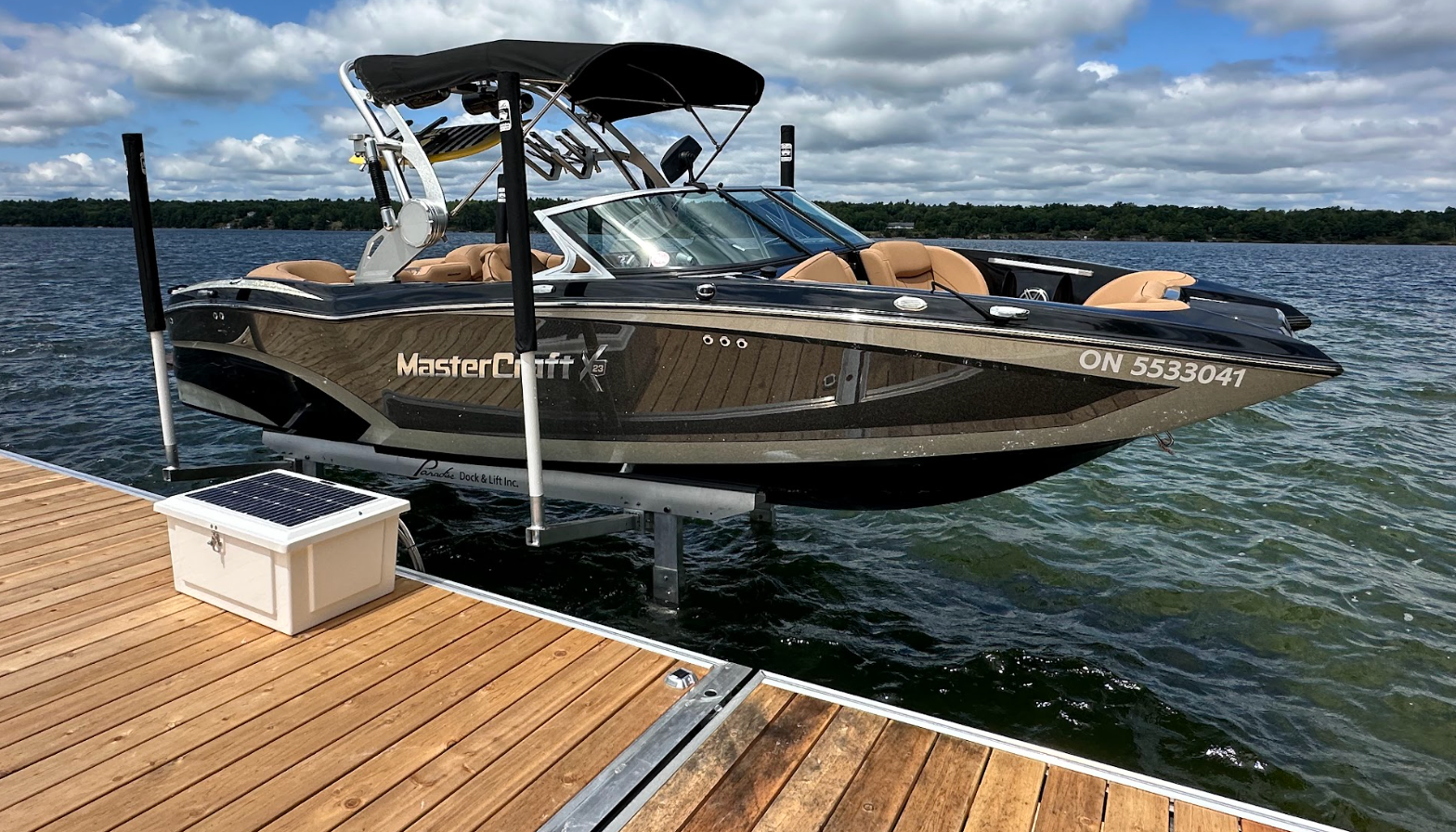
- A boat lift
- A boathouse
- A specific section exposed to recurring ice pressure
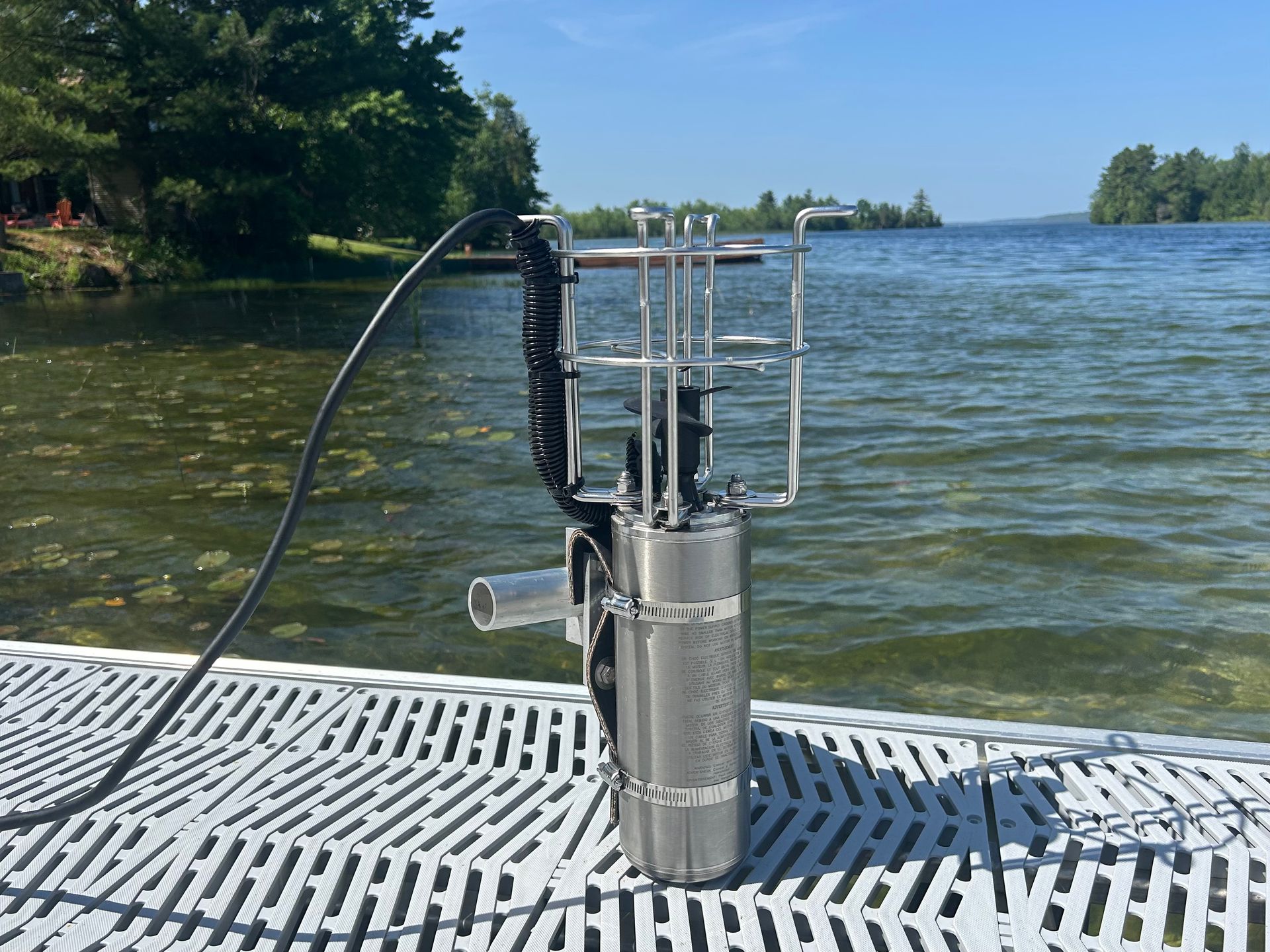
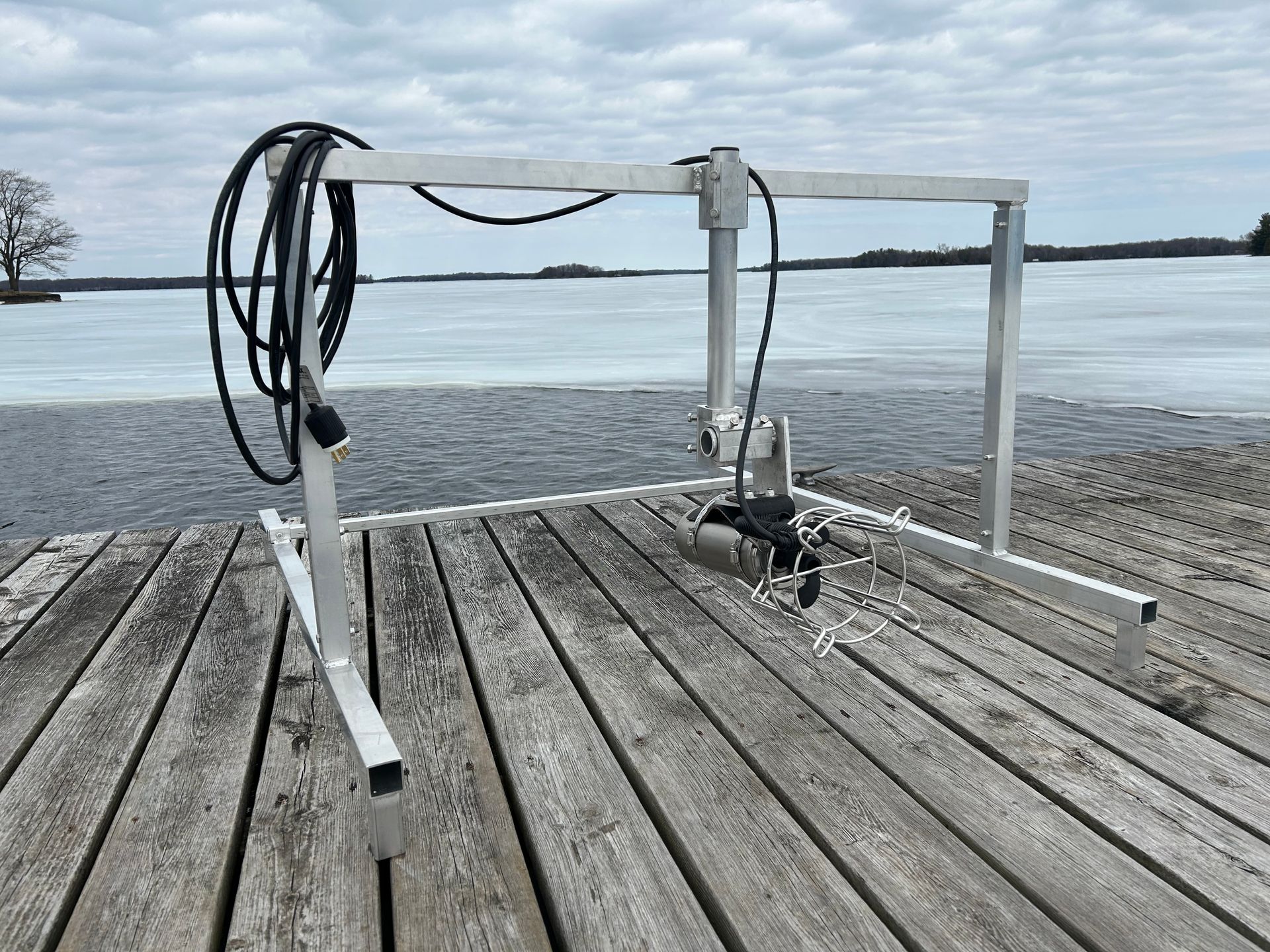
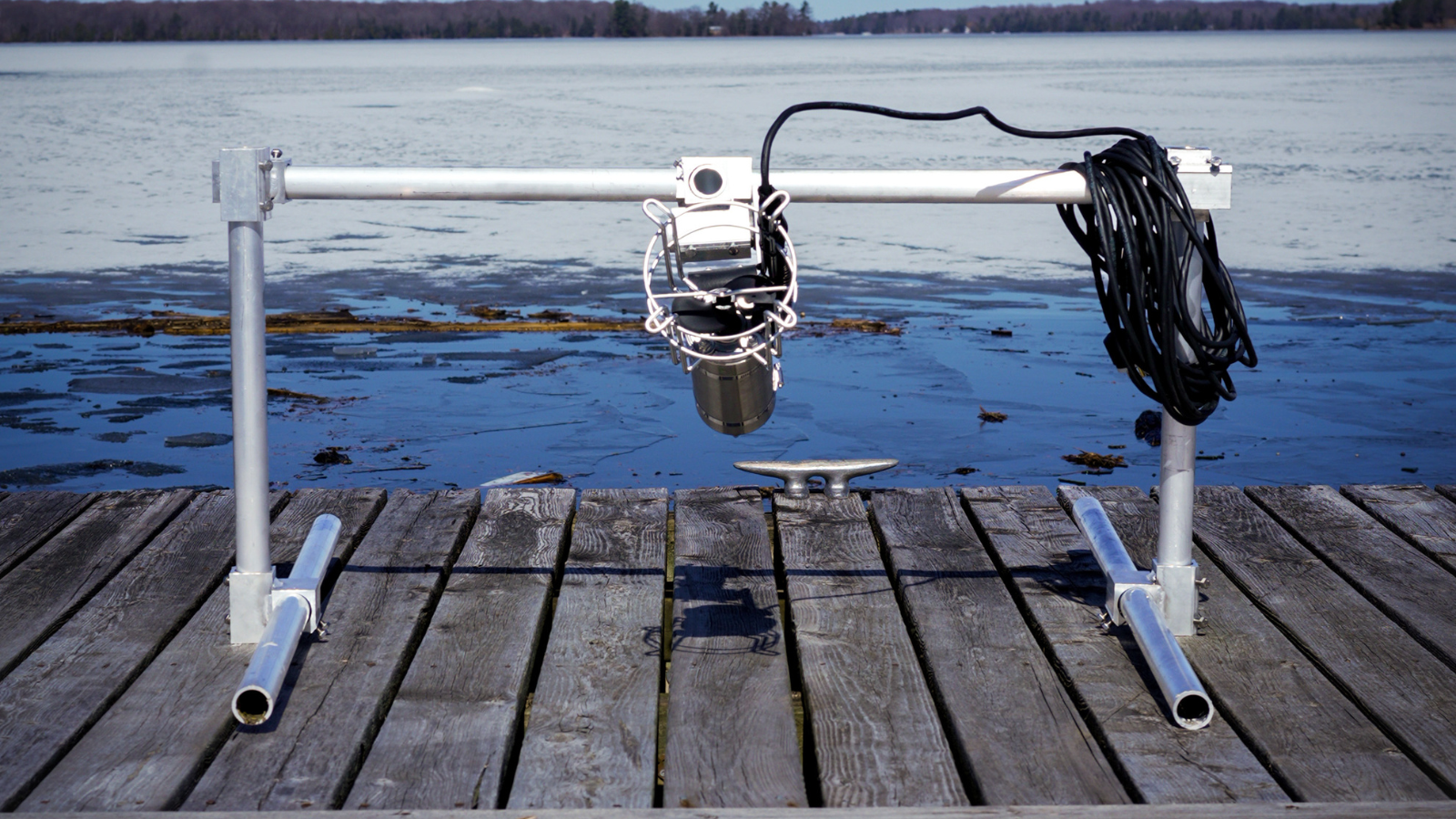
Our adjustable mounting options allow the angle and direction of the de-icer to be changed so water movement can be directed toward the areas that need it most.
Where to Place a Dock De-Icer for Maximum Ice Protection explains why positioning should be based on the structures you're protecting and how water moves around them.
Your Entire Waterfront Matters, Not Just Depth
Two docks sitting in four feet of water won't necessarily experience identical winter conditions.
Wind exposure, currents, shoreline shape, structures, temperatures, and weather patterns can all influence ice formation and de-icer performance.
Natural Resources Canada provides information about mapping and monitoring lake ice, including how lake ice conditions can vary across different Canadian environments.
Ontario also maintains information about physical conditions in inland lakes and streams, including water temperature, ice dates, wind, and other conditions that can vary between locations.
That's why depth should be treated as an important piece of the puzzle rather than the only measurement that determines whether a de-icer will work.
What If the Best Location Isn't Directly Under the Dock?
A shallow shoreline doesn't necessarily mean every part of your waterfront has the same depth.
In some situations, there may be deeper water farther from the dock or in a different position around the structure.
Our mounting options include dock-mounted and lake-bottom configurations, giving you more flexibility in where the de-icer can be positioned. A lake-bottom setup can also be repositioned and angled to direct water movement toward a target area.
The objective isn't simply to put the de-icer in the deepest spot you can find. It's to find a position that provides appropriate water depth and directs circulation toward the structures that need protection.
Can One De-Icer Be Enough in Shallow Water?
Possibly, but don't determine that based on depth alone.
The area you're protecting, dock configuration, available depth, mounting position, and local winter conditions all influence the coverage you can expect.
Shallow or complicated waterfront layouts may sometimes benefit from a different placement strategy or more than one circulation point.
For a closer look at coverage, read
How Much Area Does a Dock De-Icer Cover?
So, Do Dock De-Icers Work in Shallow Water?
Yes, a dock de-icer can work in shallow water, but depth affects how the system should be installed and what you can reasonably expect from it.
The key is not treating a shallow-water installation exactly like a deeper one.
Measure the available depth, look at the structures you're trying to protect, consider where deeper water is located, and plan the mounting position around the conditions that actually exist at your waterfront.
Getting those details right before freeze-up gives your de-icer a much better opportunity to do what it's there to do: keep water moving where your dock and waterfront structures need protection most.