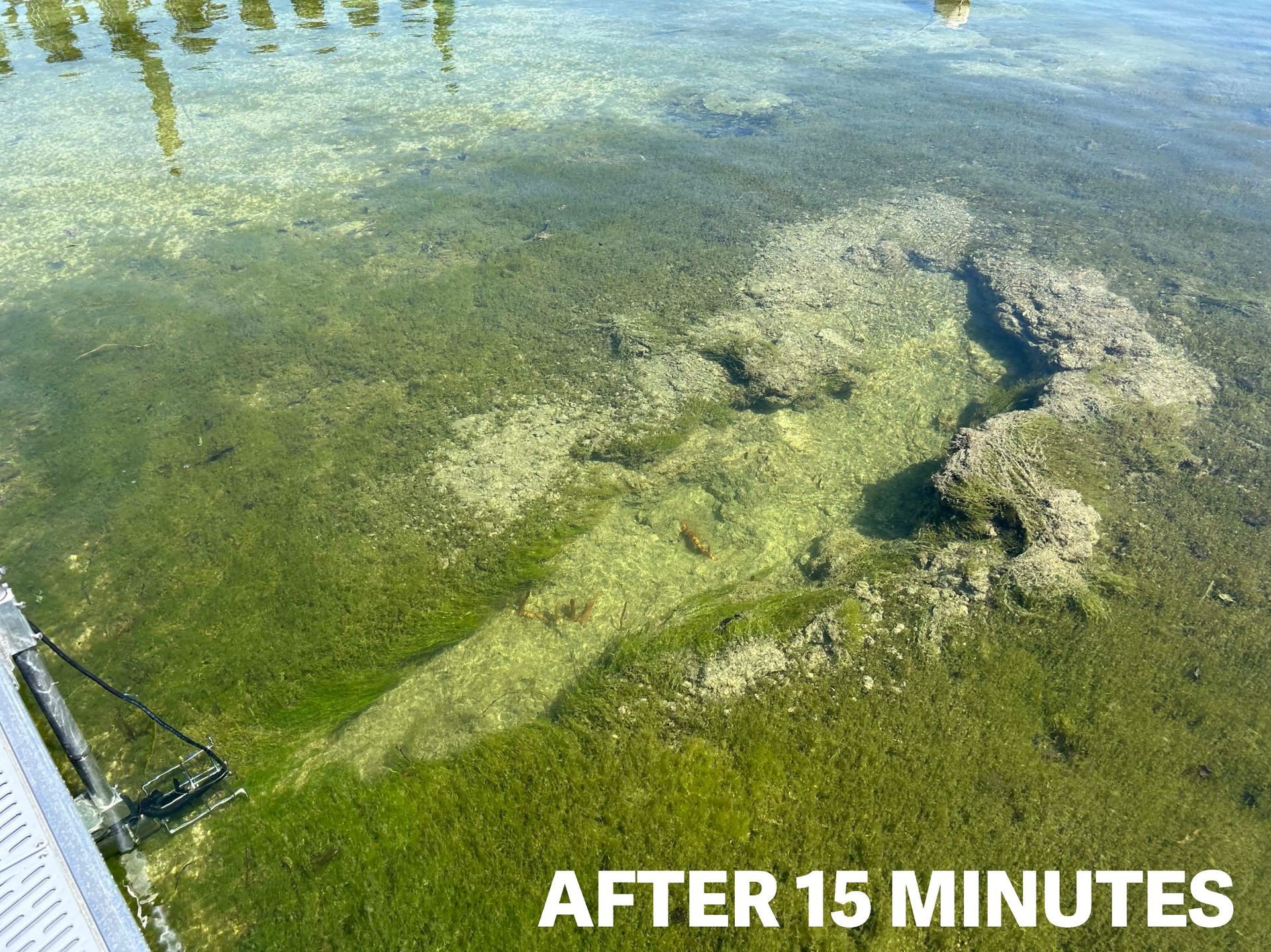

How to Get Rid of Lake Muck Around Your Dock (Without Chemicals)
If you've ever waded in off your dock and felt your feet sink into a layer of soft, dark, foul-smelling sludge, you've met lake muck. By mid-summer it can turn a beautiful swimming spot into a place nobody wants to step. The good news: you don't need to pour chemicals into your lake to deal with it. In most cases, the real fix is simpler, safer, and far better for your shoreline.
Here's what muck actually is, why it collects around your dock in particular, and how continuous water movement clears it without a single chemical.
What is lake muck, really?
Lake muck isn't dirt. It's a build-up of decaying organic matter: dead leaves, algae, aquatic weeds, fish waste, pollen, and runoff — that settles to the bottom and slowly breaks down. As it decomposes, it releases gases (that rotten-egg smell) and creates the soft, mucky layer you sink into.
The key thing to understand is that muck accumulates in
still water. Where water moves, fine organic particles stay suspended and drift away before they can settle and rot. Where water sits, those particles fall to the bottom, pile up year after year, and feed even more weed and algae growth.
Why muck loves your dock
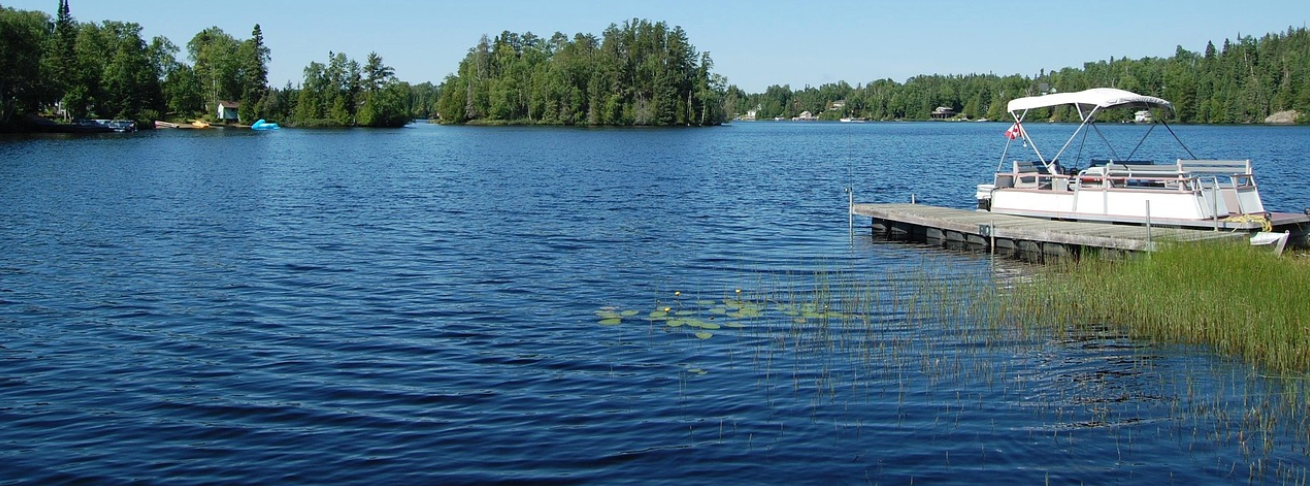
It's rarely a coincidence that the worst muck is right where you swim. Docks and shorelines create the exact conditions muck needs:
- Docks block wind and wave action. The sheltered pocket of water beside and beneath your dock is calmer than the open lake, so sediment settles there instead of moving on.
- Shorelines are collection points. Wind and current push floating debris, leaves, and algae toward shore, where it sinks and accumulates.
- Shallow, warm water speeds decay. The shallows near your dock warm up fastest in summer, and warm water accelerates the breakdown of organic material and fuels weed and algae growth.
Put those together and your dock becomes a muck magnet — a warm, sheltered, low-flow pocket where organic matter settles and stays.
Why chemicals are not the answer
When muck and weeds take over, it is tempting to reach for a chemical treatment. It is worth knowing why that is usually the wrong move, and often not even permitted.
- It is tightly regulated in Canada. What you are allowed to do at your shoreline is governed by provincial and federal rules, and applying chemical treatments to a lake is heavily restricted. Even physically removing aquatic plants comes with conditions and seasonal timing windows to protect fish. In Ontario, for example, there are specific rules for removing native aquatic plants and removing invasive aquatic plants. Always confirm the rules for your province and lake before you treat or remove anything.
- It treats the symptom, not the cause. Chemicals might knock back weeds or algae for a few weeks, but the muck layer that feeds them is still there. The problem returns, so you are back to treating again and again.
- It can make muck worse. Killing off a bloom of weeds or algae adds a fresh load of dead organic matter to the bottom, which is more fuel for the muck layer.
- It affects everything in the water. Fish, insects, and the healthy aquatic life that keeps your lake balanced all live in that same water. Stewardship groups like the Federation of Ontario Cottagers' Associations stress protecting shoreline health rather than working against it.
Chemicals fight the lake. A better approach works with it.
The chemical-free fix: keep the water moving
Since muck forms where water is still, the most effective long-term solution is to stop the water from sitting still. That is exactly what a water circulator does.
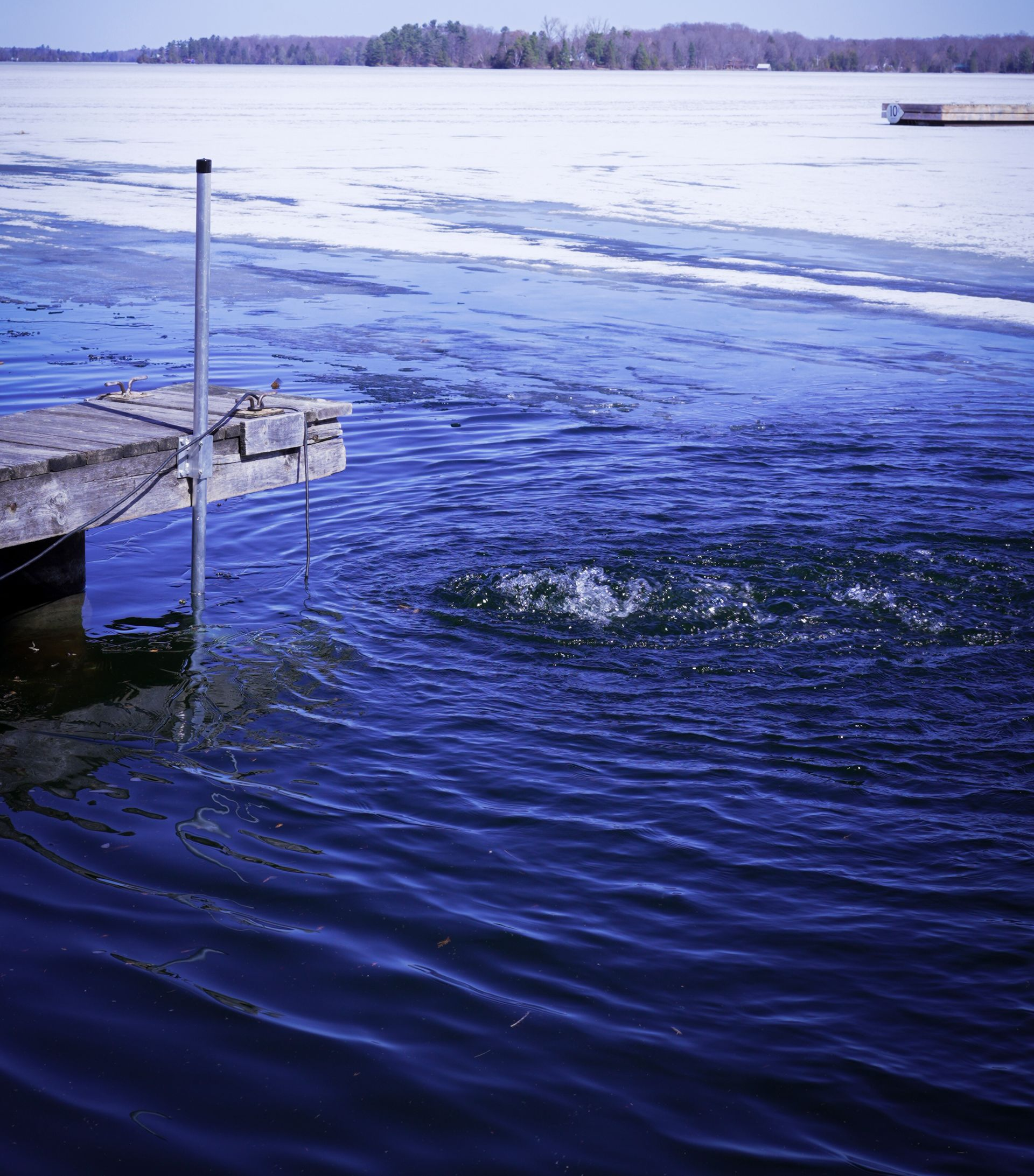
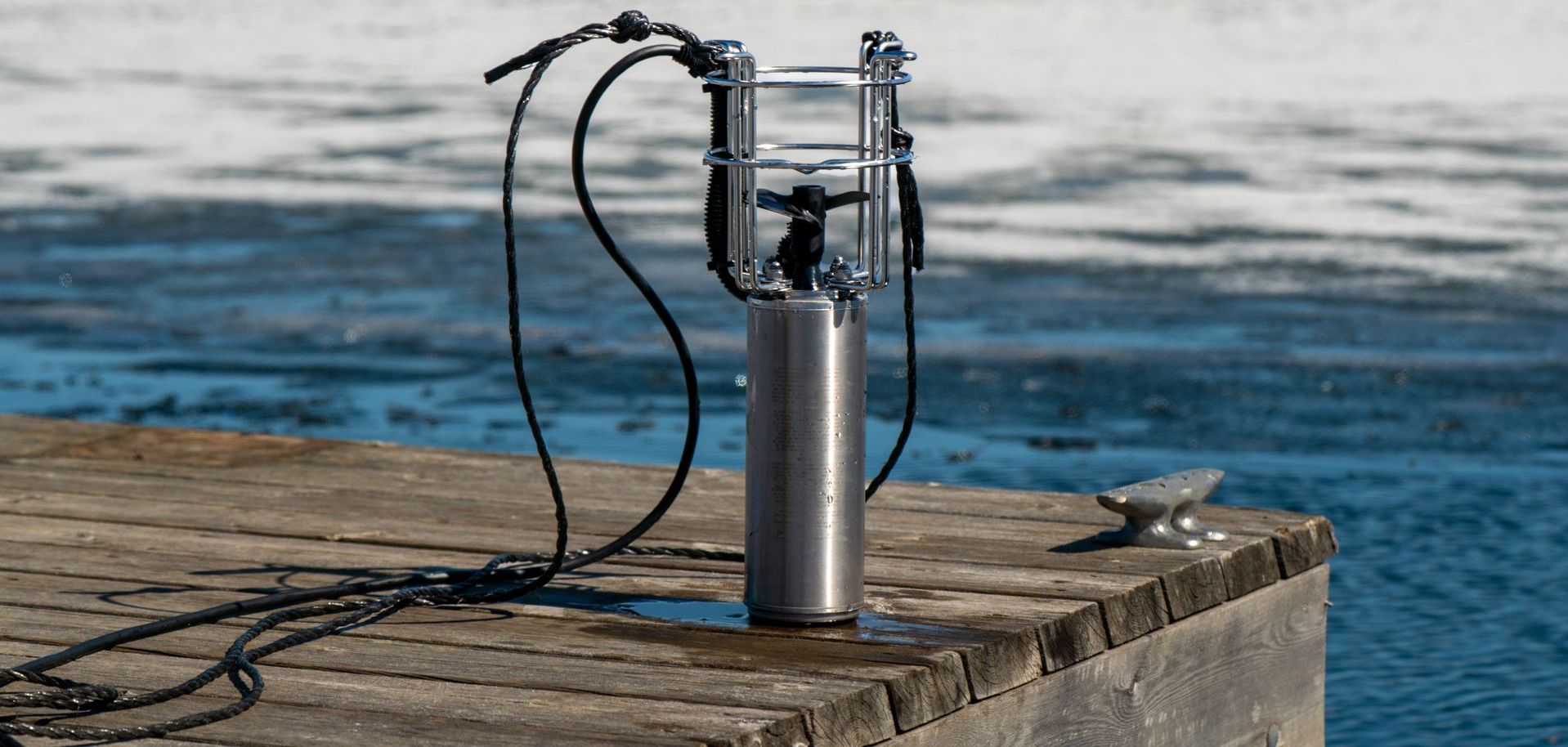
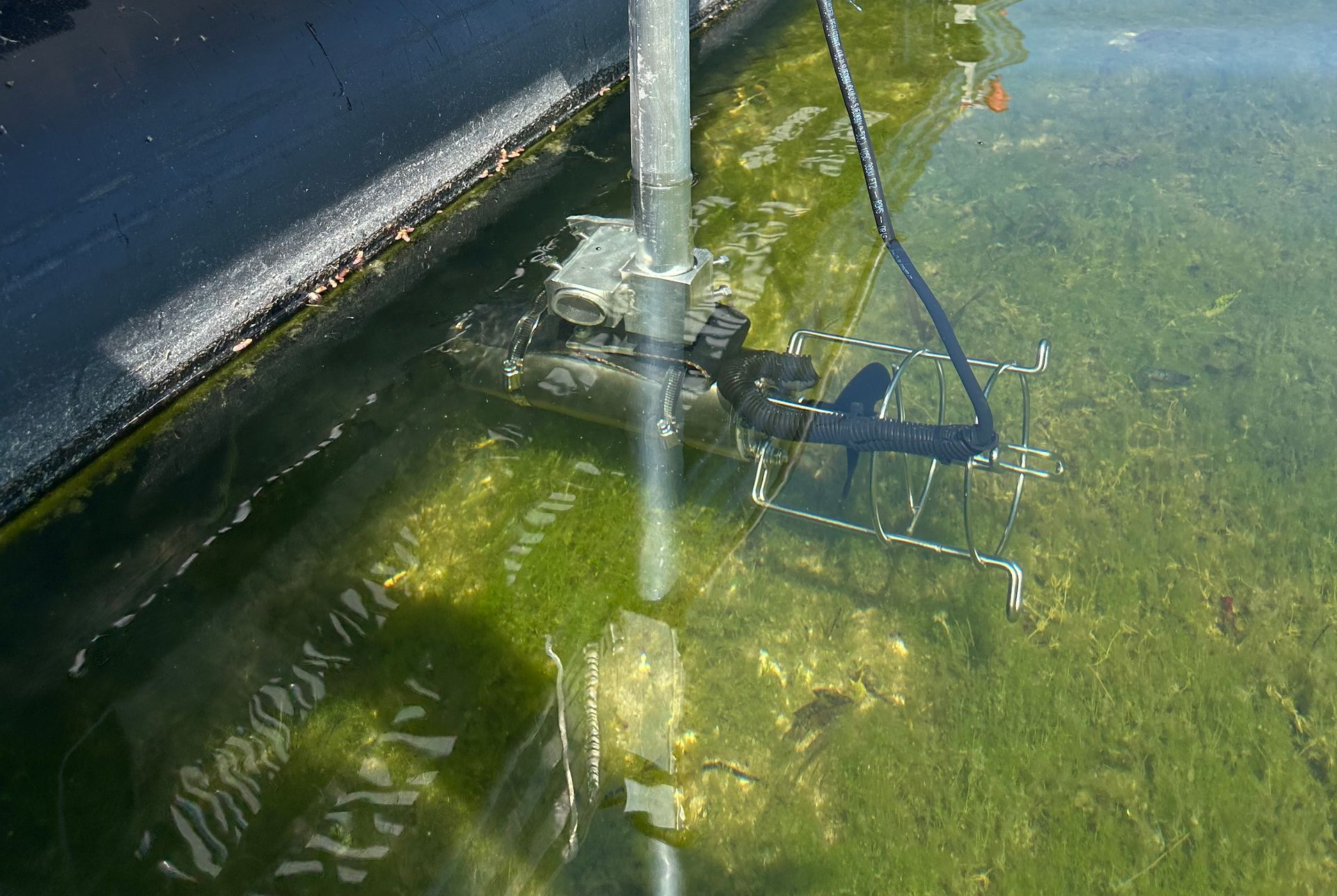
A circulator uses a submerged propeller to create constant, gentle water movement across the bottom around your dock. That steady current does what nature does in the open lake:
- Keeps organic particles suspended so they drift away instead of settling and rotting on your bottom.
- Discourages new muck from forming by preventing the stagnant, low-oxygen conditions muck needs to build up.
- Reduces weed and algae growth by taking away the calm, warm water they thrive in.
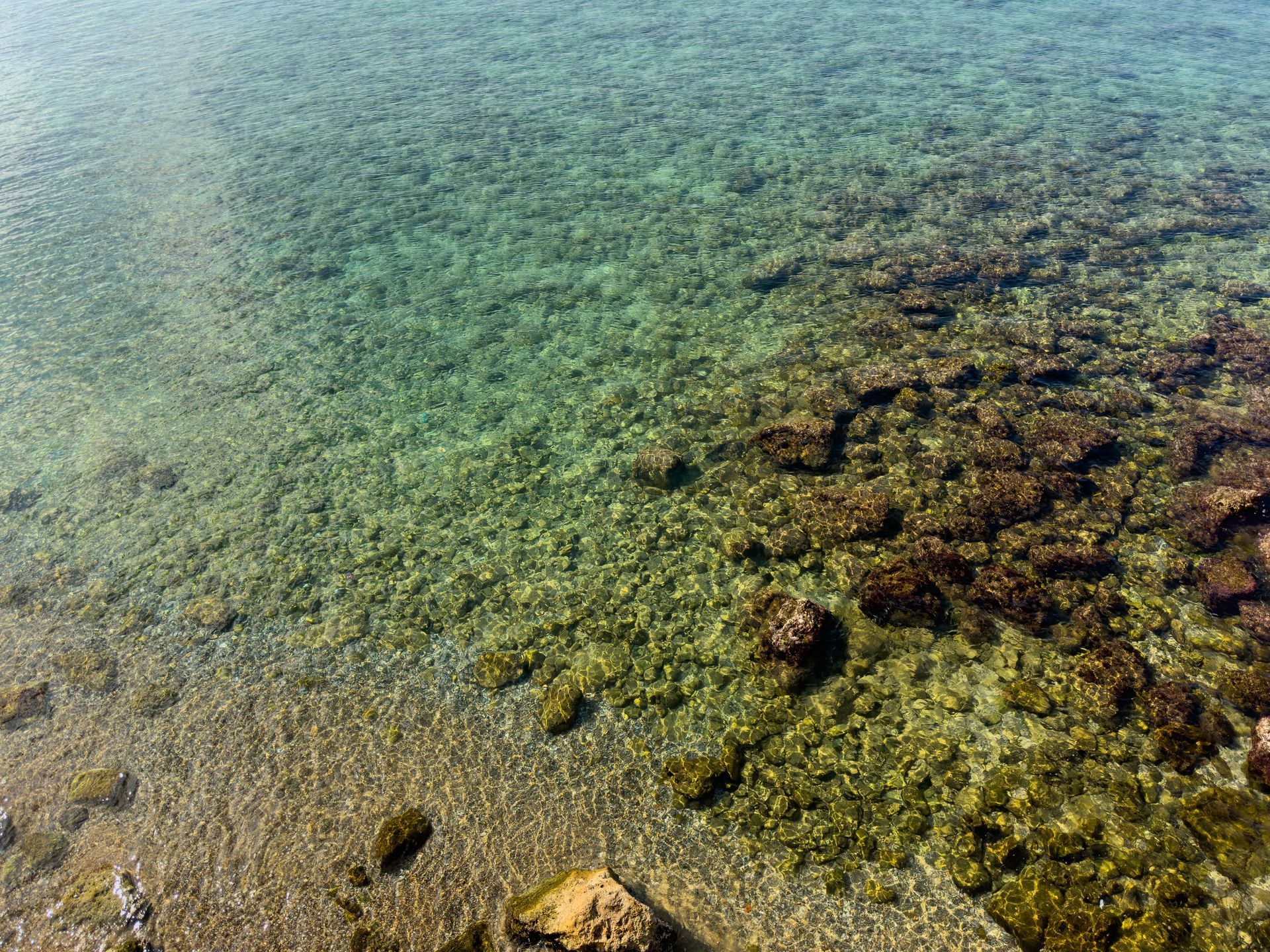
- Improves water clarity and quality over the season, as the area is continuously turned over instead of left to stagnate.
Unlike a one-time chemical dose, circulation works around the clock all season, and it improves the health of your water rather than adding something to it.
Which Arbrux setup is right for your shoreline?
Arbrux builds its de-icers and circulators in Canada, tested for exactly these conditions. Two options handle muck around a dock.
The Arbrux Water Circulator
The
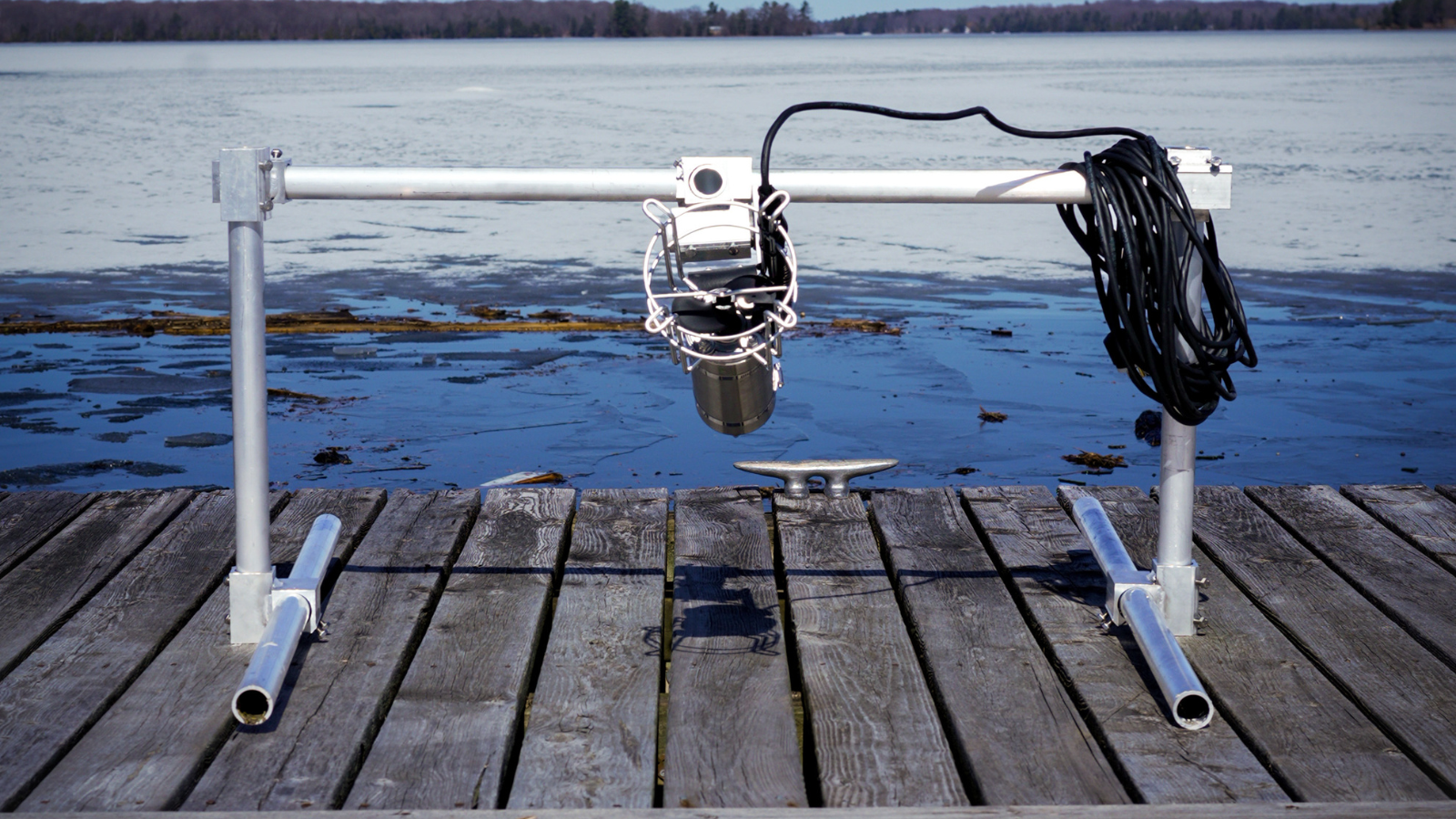
Arbrux Circulator is our dedicated water-movement solution. Its high-performance, impact-tested propeller creates continuous circulation that clears up to a 60-foot-diameter area of lake bottom, keeping the water moving, discouraging weeds, and improving clarity all summer long.
- Water-cooled, water-lubricated motor built for continuous, maintenance-free operation
- Welded stainless steel motor mount for long-lasting durability
- 1/2 HP, 115V, UL and CSA certified
- 2-year warranty, mooring ropes included
- Available in 25 ft, 50 ft, and 100 ft cable lengths
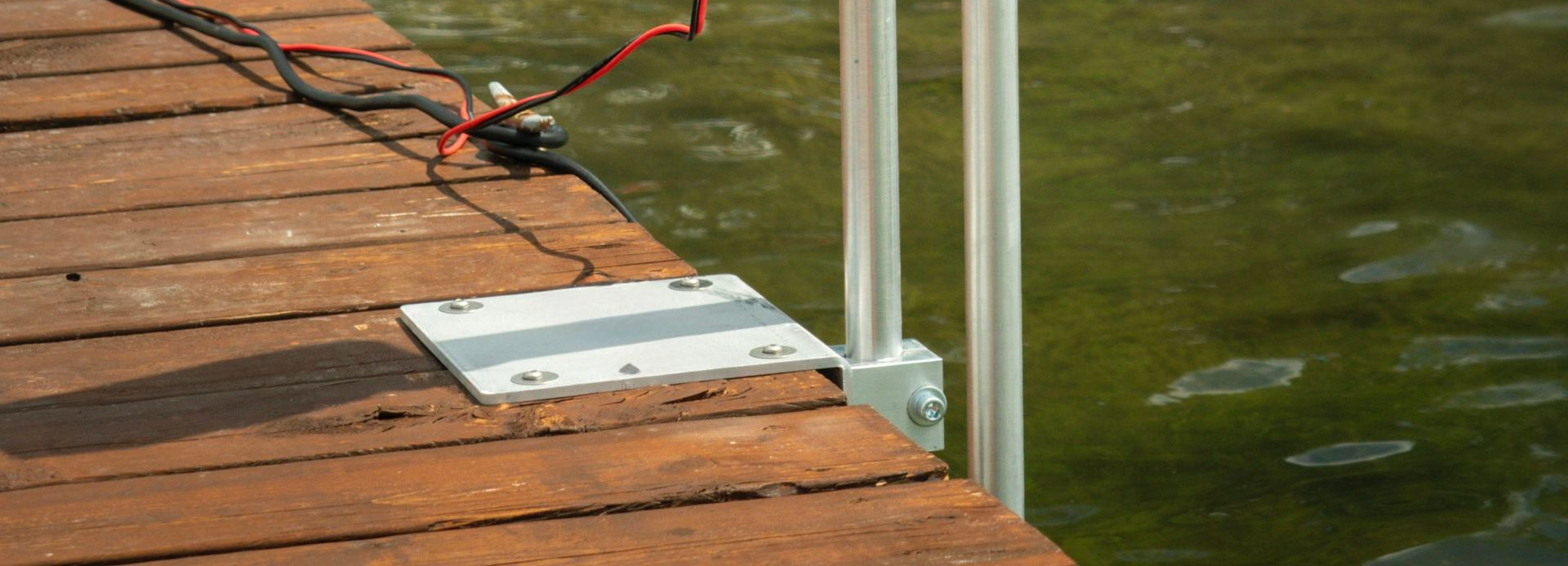
If you have a dock to mount it from, the Circulator paired with a dock mount is a clean, effective setup.
The Lake Bottom Bundle (no dock required)
If your muck problem is out in front of the shore, or you do not have a dock to mount from, the
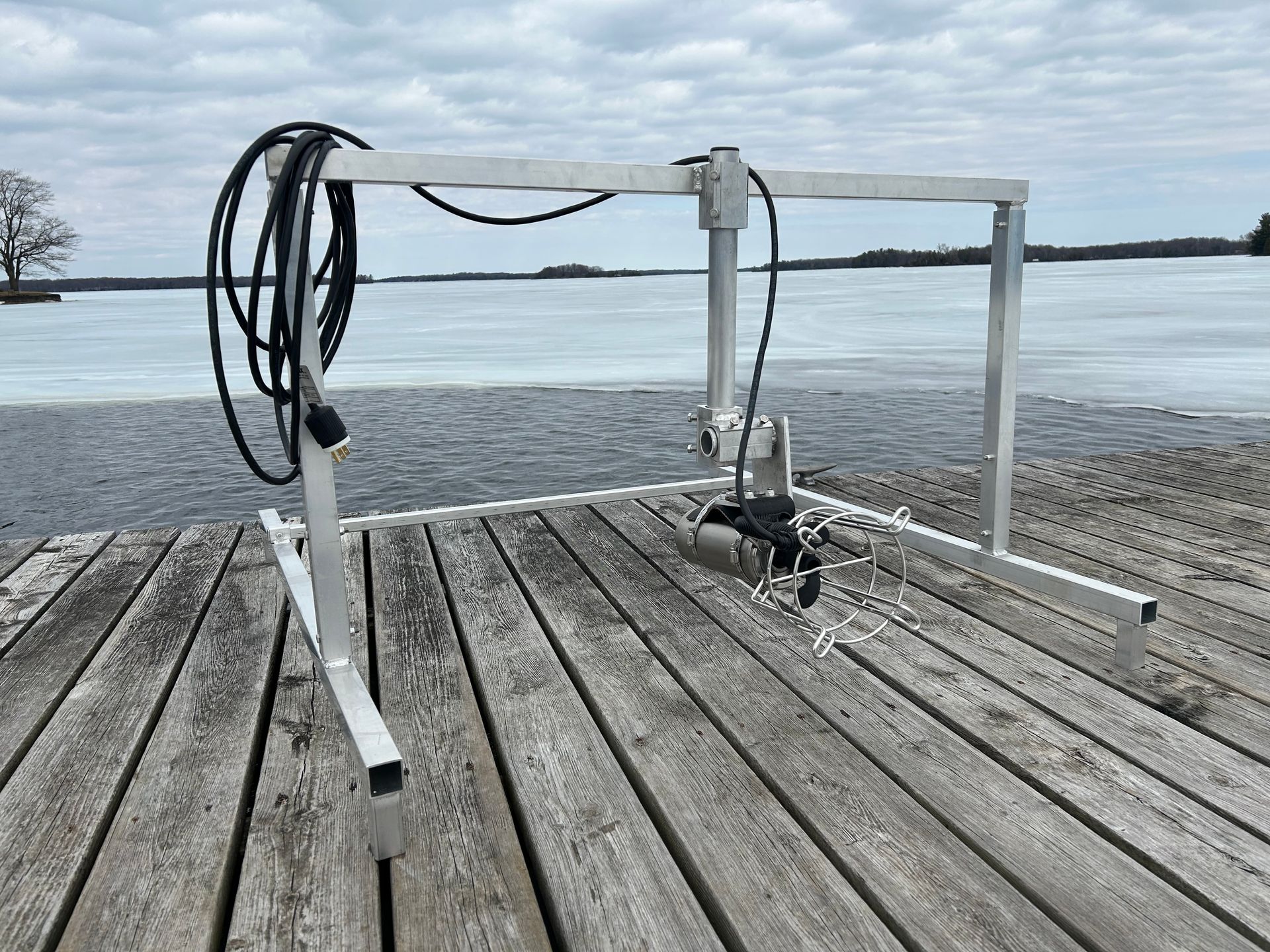
Lake Bottom Bundle is the better fit. It pairs an Arbrux pump with the free-standing Lake Bottom Mount, so you can place it anywhere along your shoreline.
- Free-standing frame installs in any body of water, no dock needed
- Fully adjustable and rotatable to aim circulation right at your problem area
- Easily repositioned as conditions change through the season
- Doubles as a de-icer in winter (keeps a 40-foot ice-free area), making it a true all-season tool
- 2-year warranty, mooring ropes included
Because the mount is adjustable and movable, the Lake Bottom Bundle is ideal if you want to target a specific mucky pocket and fine-tune the flow.
A cleaner shoreline, the natural way
Muck around your dock is not something you have to live with, and it is not something you have to fight with chemicals. It builds up because the water there sits still, so the lasting solution is to get that water moving again. Do that, and you will see a clearer bottom, fewer weeds, less odour, and a swimming area you actually want to use.
Not sure which setup suits your shoreline?
Contact the Arbrux team and we will help you choose the right circulator and mount for your water depth and dock, so you can get back to enjoying your waterfront.