
How Much Area Does a Dock De-Icer Cover?
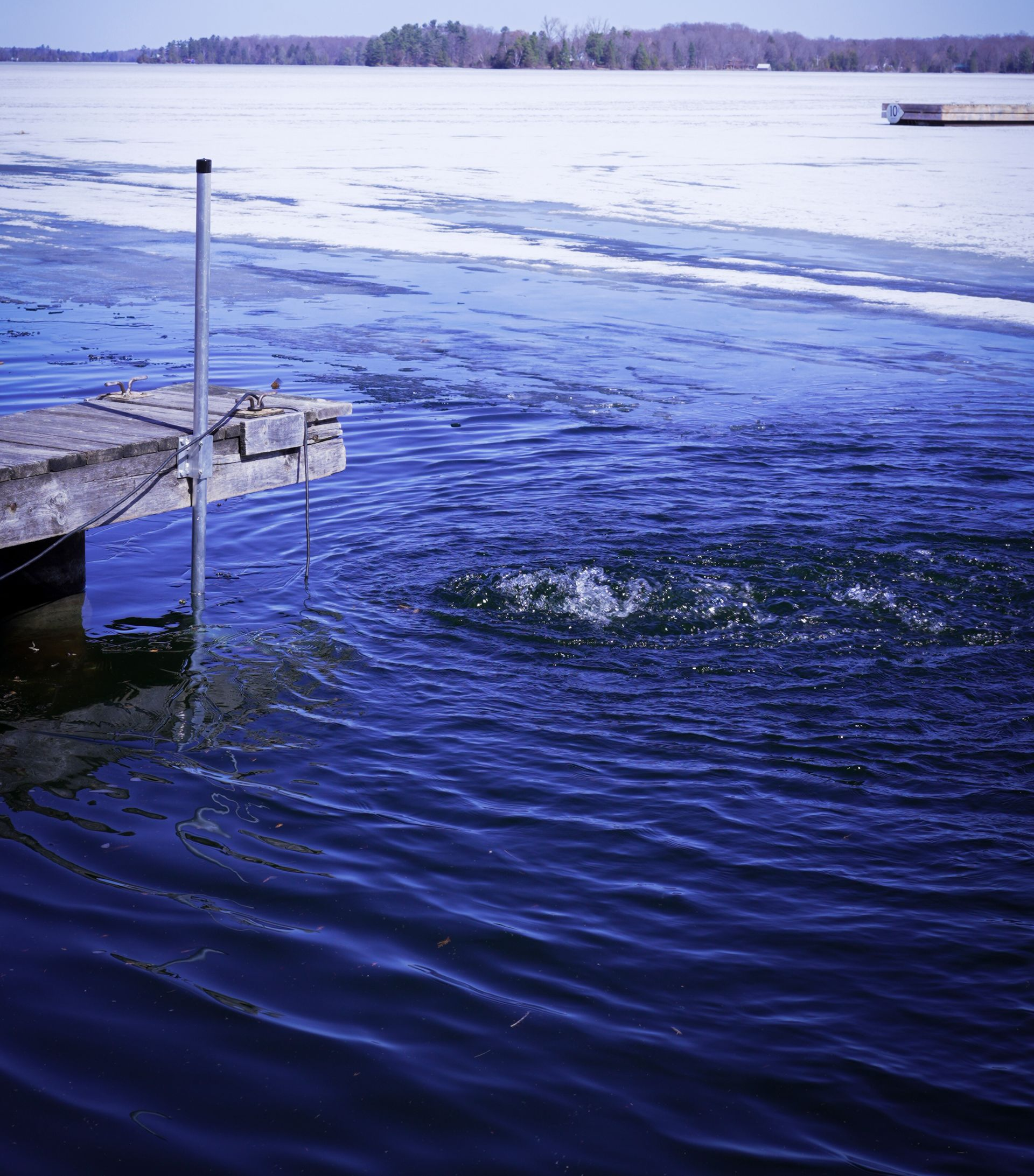
One of the first questions many waterfront owners ask before purchasing a dock de-icer is, "How much area will it actually protect?"
It's a reasonable question, but there isn't a single answer.
Unlike products with a fixed coverage rating, the amount of water a dock de-icer can protect depends on the conditions at your waterfront. Water depth, dock layout, mounting position, weather, and winter ice conditions all influence how effectively a unit performs.
Understanding these factors will help you choose a system that matches your waterfront instead of relying on a single coverage number.
There Isn't a Universal Coverage Area
It would be convenient if every dock de-icer protected the same size area under every condition.
In reality, no two waterfronts are exactly alike.
A unit protecting one dock exceptionally well may produce different results at another property simply because the shoreline, water depth, or winter conditions are different.
This is one reason experienced waterfront owners evaluate their shoreline first before selecting equipment.
Organizations like
Watersheds Canada encourage property owners to understand the unique characteristics of their shoreline when making decisions about waterfront management.
What Determines How Much Area a Dock De-Icer Covers?
Several factors influence how much protection a dock de-icer can provide.
Water Depth
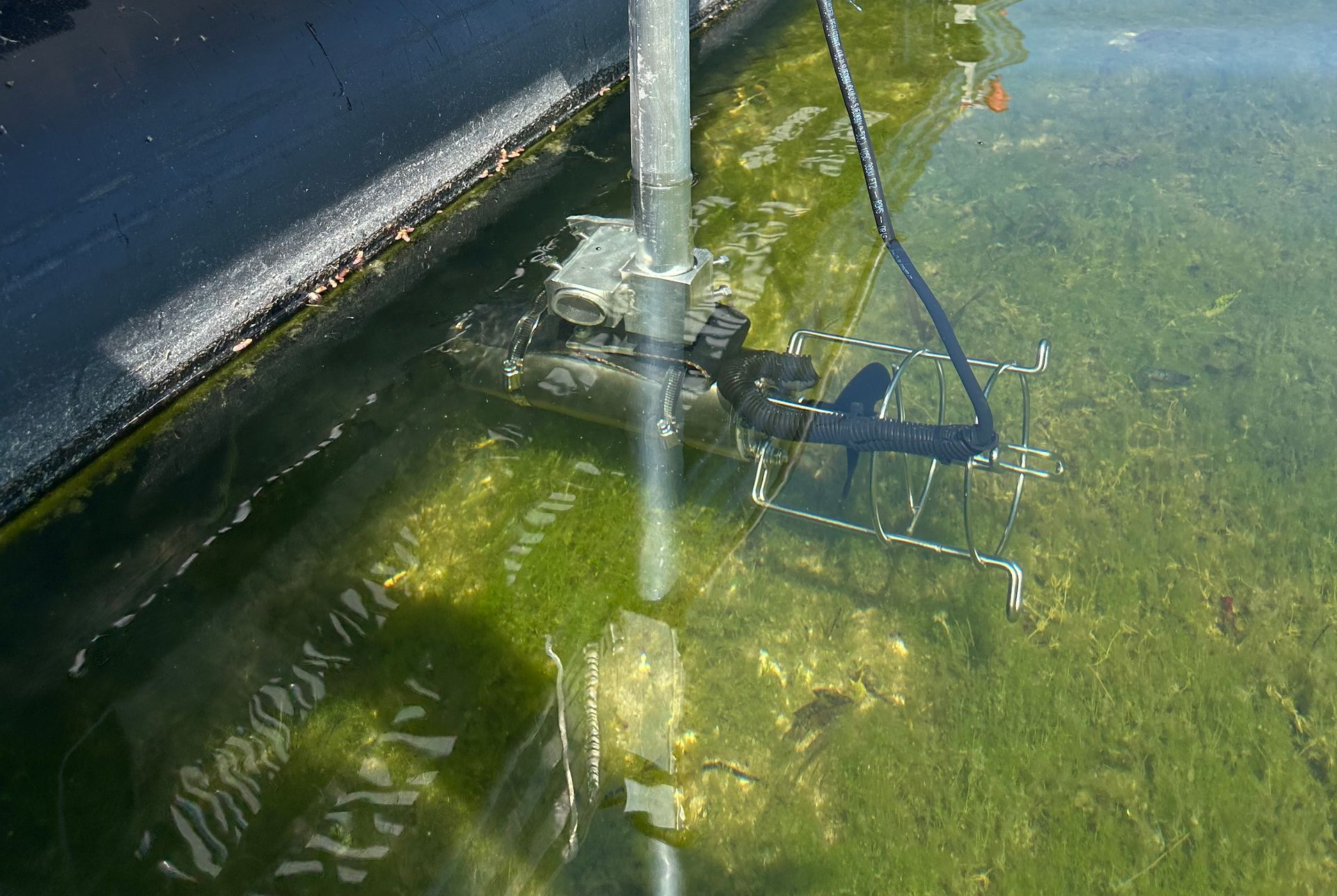
The amount of water beneath the unit affects how water circulates upward and outward.
Shallow water behaves differently than deeper installations, which can influence the size and shape of the protected area.
Dock Layout
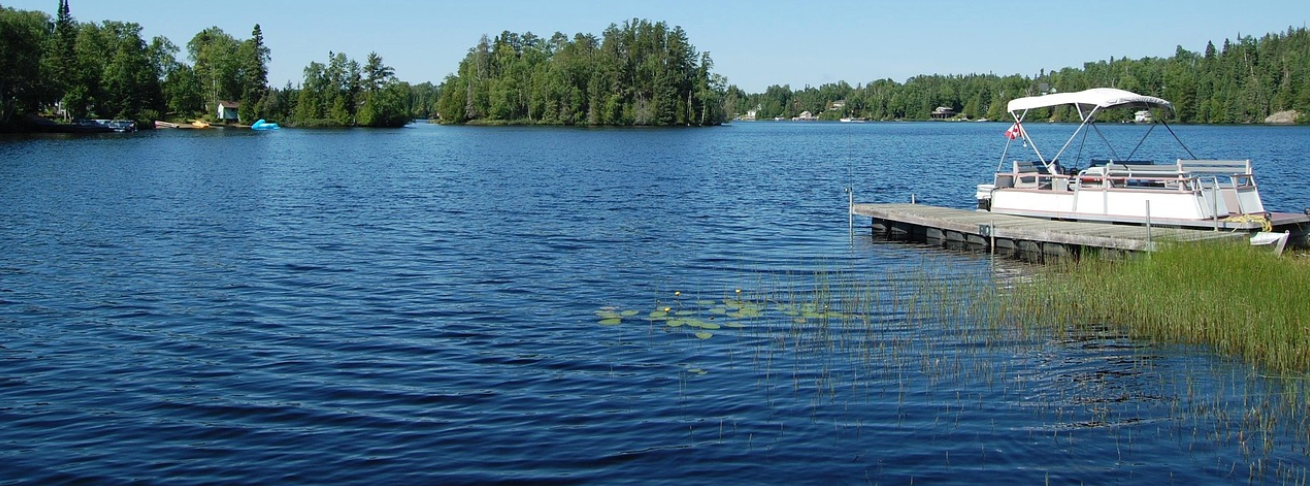
A long straight dock, an L-shaped dock, and a marina slip all create different conditions.
Pilings, cribs, boat lifts, and surrounding structures can also affect how water moves around the dock.
Mounting Position
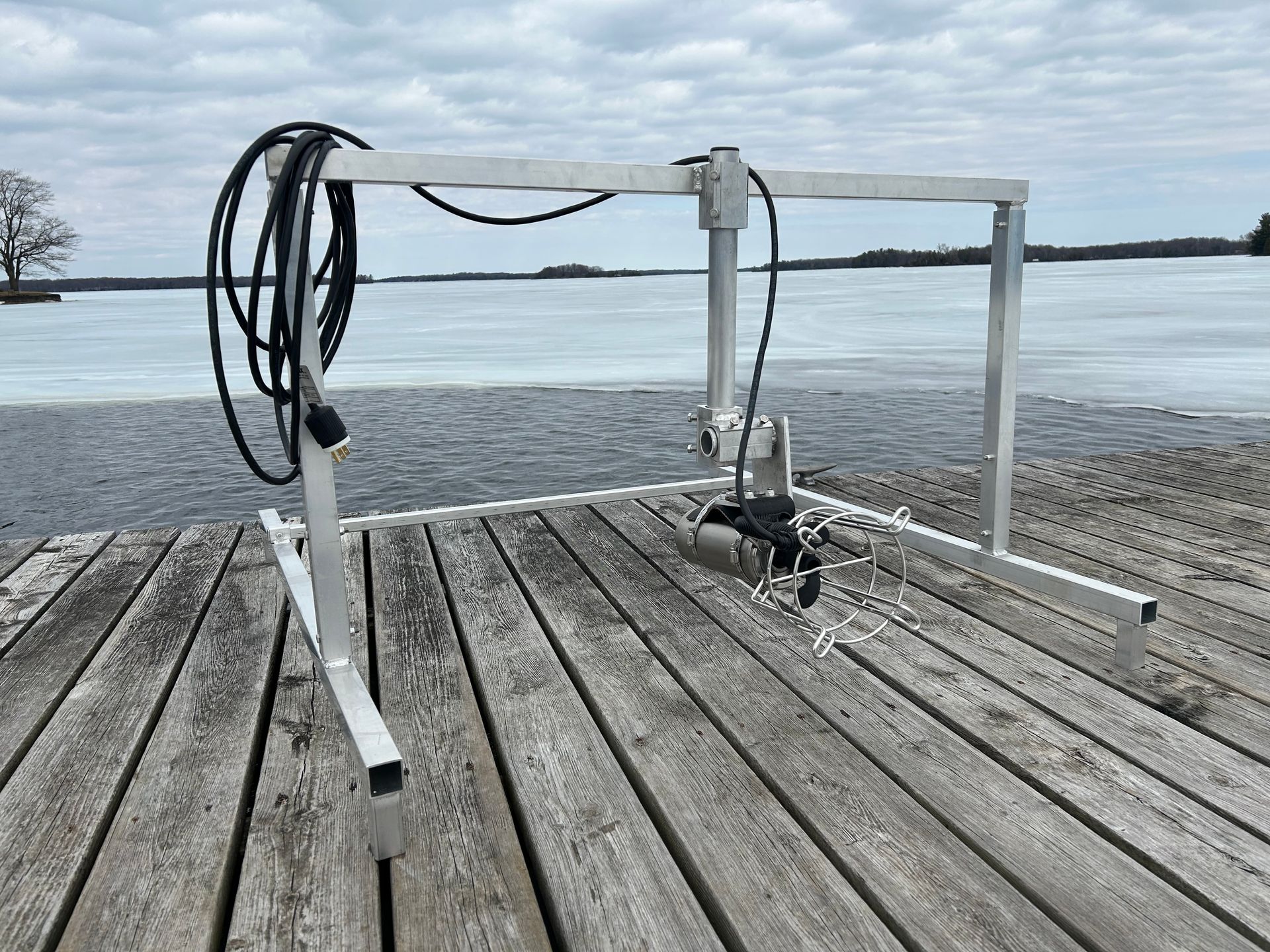
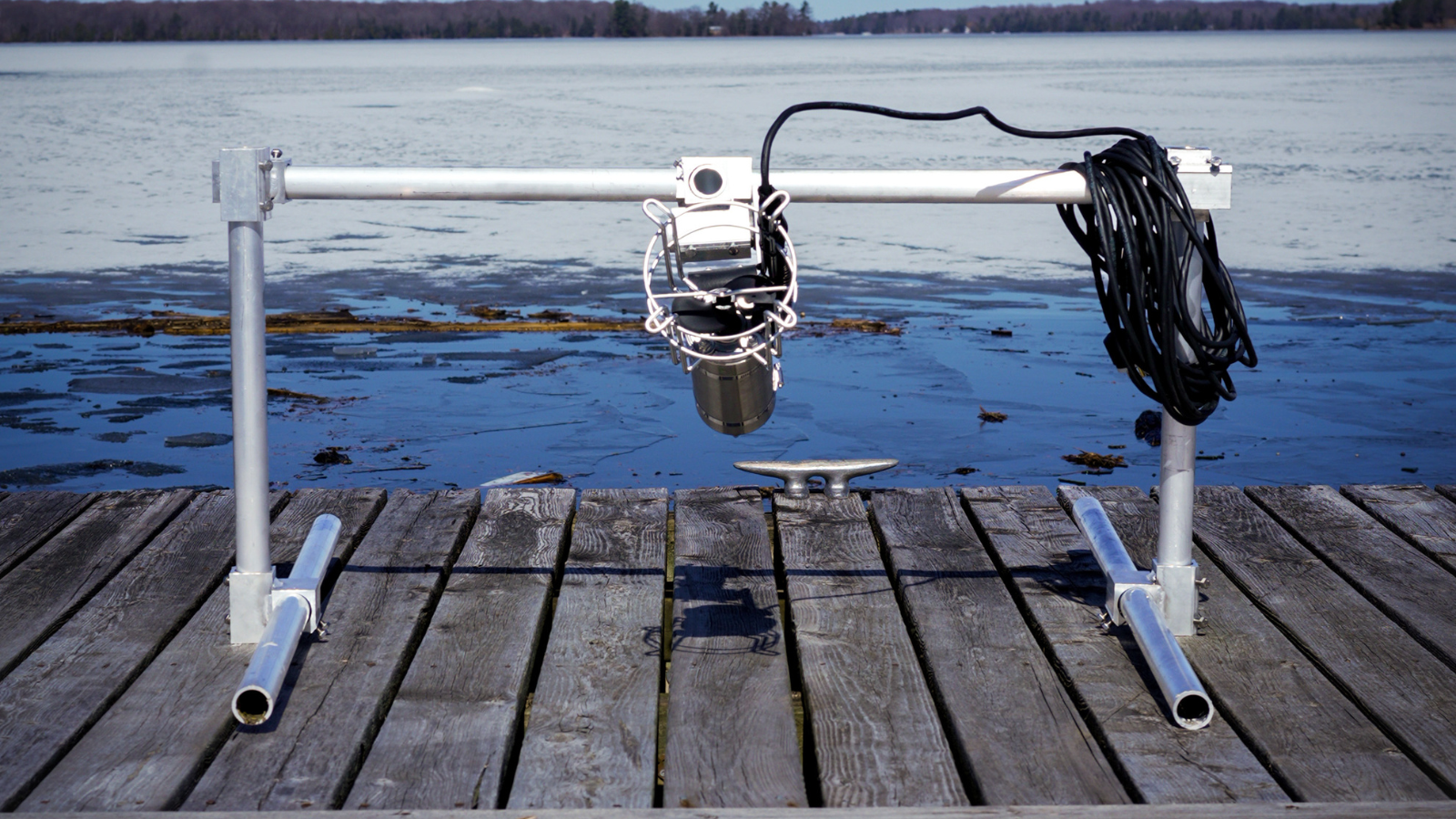
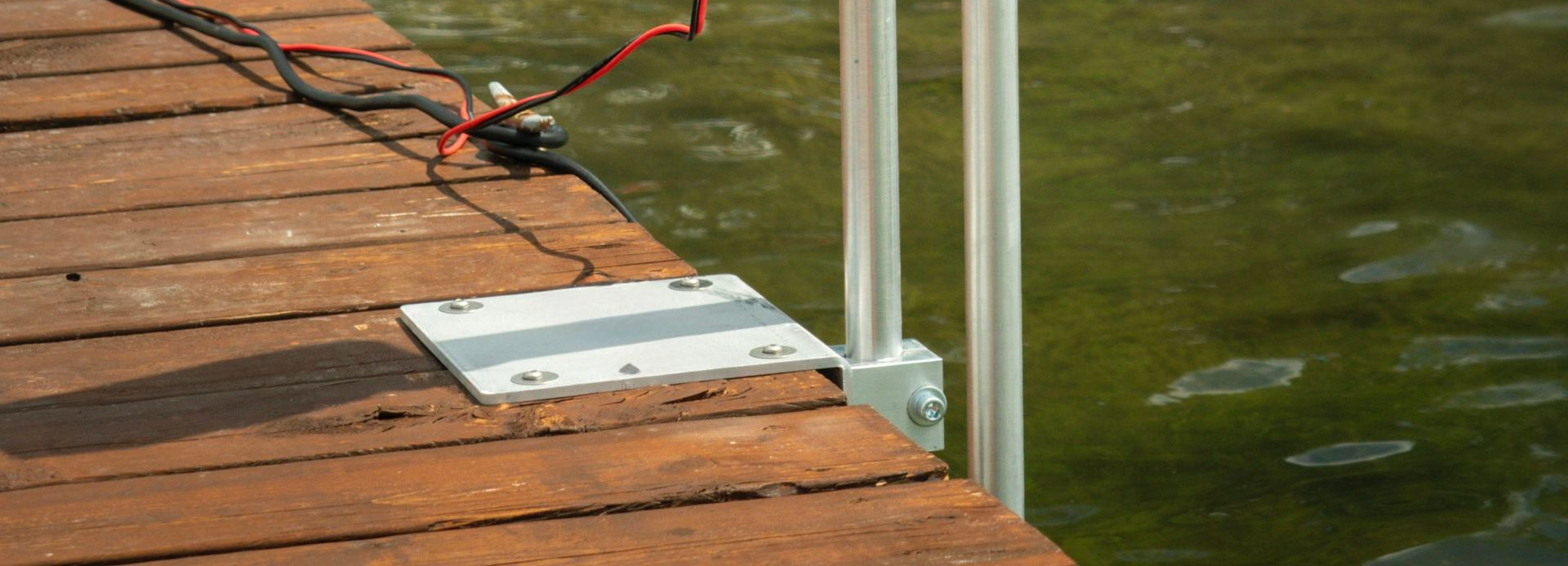
How and where a dock de-icer is mounted makes a significant difference.
Vertical and angled mounting positions create different flow patterns, allowing water to be directed toward the areas that need protection most.
Placement is just as important as selecting the correct unit, which is discussed further in
Where to Place a Dock De-Icer for Maximum Ice Protection.
Your Winter Conditions Matter
Every winter is different.
Ice thickness, prolonged cold temperatures, wind direction, snow accumulation, and fluctuating water levels all influence how a dock de-icer performs throughout the season.
A waterfront exposed to consistent wind may experience different ice conditions than a sheltered bay only a short distance away.
The
Canadian Wildlife Federation provides educational resources on Canadian freshwater environments and how seasonal conditions continue to shape lakes and rivers throughout the year.
What Are You Trying to Protect?
Coverage also depends on your objective.
For some waterfront owners, the goal is to reduce ice pressure around a permanent dock.
Others may want to help protect a boat lift, create an opening around pilings, or maintain open water in a specific section of their waterfront.
These objectives require different circulation patterns, which means the ideal setup may vary from one property to the next.
Thinking about what you're protecting is often just as important as thinking about how much area you want to cover.
Bigger Isn't Always Better
It's easy to assume that a larger unit automatically provides better protection.
In practice, selecting the right system involves balancing several factors, including dock size, shoreline conditions, water depth, and placement.
An appropriately sized unit that's installed correctly will generally perform better than simply choosing the largest model available.
Every Waterfront Is Different
It's easy to assume that a larger unit automatically provides better protection.
In practice, selecting the right system involves balancing several factors, including dock size, shoreline conditions, water depth, and placement.
An appropriately sized unit that's installed correctly will generally perform better than simply choosing the largest model available.The question isn't simply, "How much area does a dock de-icer cover?"
It's: "How much area will it protect on my waterfront?"
The answer depends on the unique characteristics of your shoreline, your winter conditions, and what you're trying to accomplish.
Understanding those variables is the best way to choose a system that provides the right level of protection for your dock throughout the winter.
The
Federation of Ontario Cottagers' Associations (FOCA) offers a variety of resources that encourage Ontario waterfront owners to evaluate the unique conditions of their property before making shoreline management decisions.