
How Ice Damages a Dock (and What a De-Icer Can Do About It)
Every spring, someone walks down to the water and finds a crib that has shifted, a lift leg standing a few inches higher than the others, or decking with a new twist in it. Nobody saw it happen. It happened slowly, over months, under the ice.
Knowing how ice does that damage makes it much easier to protect your waterfront. There are three forces at work, and a de-icer handles two of them well.
1. Expansion: ice needs more room
Water grows by roughly 9 per cent as it freezes. On a lake, that extra volume has to go somewhere, so the ice sheet pushes sideways against anything frozen into it: cribs, pilings and boathouse walls.
It does not happen just once. On a cold night the ice contracts and cracks. Water fills the cracks and freezes. When the air warms, the sheet expands again with more ice in it than before. Each cycle pushes a little farther, which is why winters that swing between deep cold and thaws are often the hardest on docks.
2. Ice jacking: ice grips and lifts
Once ice forms around a post, piling or lift leg, it holds on like a clamp. If the water level under the ice rises or drops, the ice moves and takes the post with it.
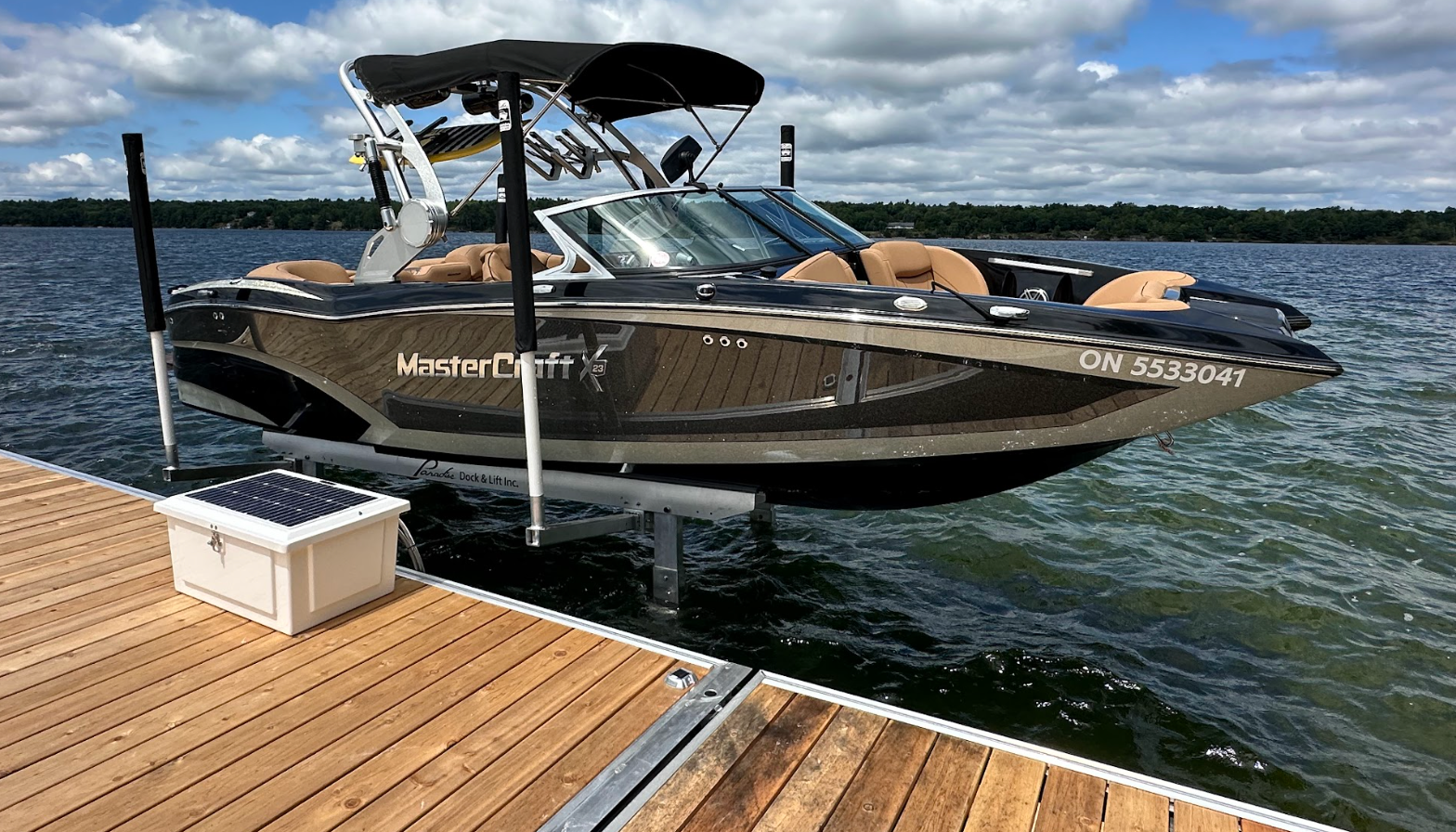
Single pilings, tie-off posts and boat lift legs usually go first, since they weigh less than the rest of the dock. Over one winter they can be pulled up bit by bit and never settle back down. If your lake is drawn down for winter or rises with rain and thaws, this is the one to watch.
3. Moving ice: shoves and floes
During break-up or a mid-winter thaw, strong wind can drive a loose sheet of ice toward shore. On a big lake with a long reach of open water, that ice can pile up on the shoreline and crush docks, decks and boathouses in a matter of hours. In rivers, current can carry floes into structures in the same way.
Which damage a de-icer helps prevent
Expansion
When: all winter, worst with freeze-thaw swings
What it damages: cribs, pilings, boathouse walls
Can a de-icer help? Yes. Open water around the structure leaves the ice nothing to push against there.
Ice jacking
When: whenever the water level changes under the ice
What it damages: pilings, lift legs, posts
Can a de-icer help? Yes. Ice cannot grip a post it never freezes around.
Shoves and floes
When: break-up, thaws, strong wind, river current
What it damages: anything close to shore
Can a de-icer help? No. Moving ice is far stronger than the current any de-icer makes. Plan for it in other ways.
How open water protects a dock
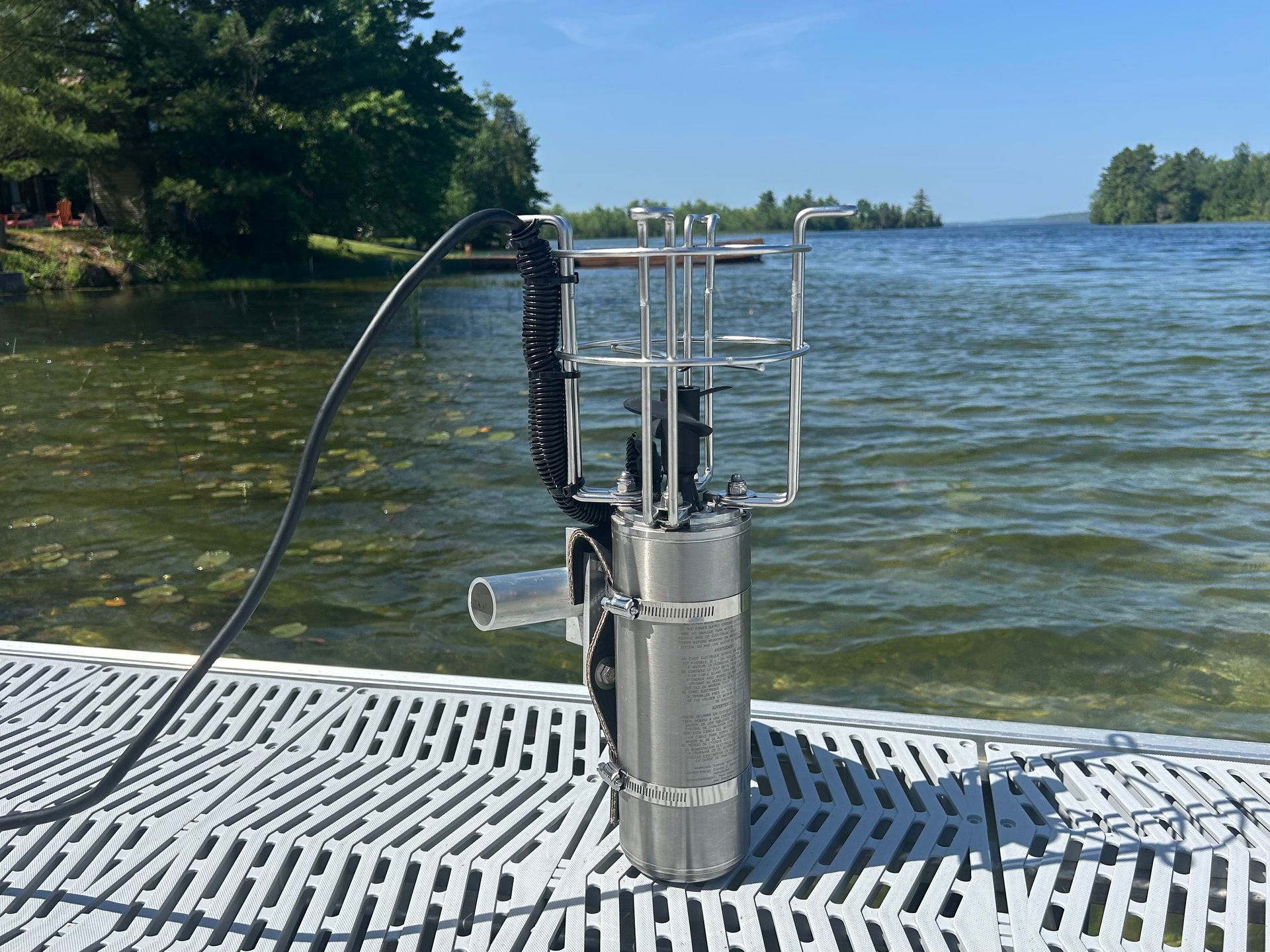
An Arbrux de-icer sits 4 to 6 feet below the surface and uses a high-speed propeller to bring warmer water up from deeper down. That keeps a 40-foot diameter circle open around whatever you aim it at, even in severe cold.
A few things make the biggest difference:
- Aim it at what matters. Point the flow at the cribs, lift legs or boathouse doors you most want to protect. The pivot bracket on the Dock Mount is built for this.
- Start before the ice does. Once ice seals the surface, it is much harder to clear. See When Should You Turn On Your Dock De-Icer?
- Match the coverage to the dock. One pump holds a 40-foot circle. A long or L-shaped dock may need a second unit. How Much Area Does a Dock De-Icer Cover? explains how to measure.
Where you need more than a de-icer
If your shoreline faces a long stretch of open lake, or your dock sits in river current, moving ice is a real risk that no de-icer can remove. A few steps help:
- Pull out every section, ladder and lift that can come out. Our fall dock checklist walks through it.
- Think hard about leaving the dock in at all. Should I Remove My Dock for Winter or Use a Dock De-Icer? lays out the trade-offs.
- Ask a local dock builder about how your shoreline and structure are built to handle spring ice.
Check your work in spring
After ice-out, walk the dock with the photos you took in the fall. Compare post heights, crib positions and the line of the decking. Small changes caught early are much cheaper to fix than a crib that has moved three winters in a row.
Protect it before the first freeze
A well-placed de-icer works quietly all winter with no regular maintenance. Ours are made in Canada, with UL and CSA certification and a 2-year warranty.
Tell us what you want to protect and how your dock is built, and our team will suggest a setup.