
Can a De-Icer Help Prevent Winter Fish Kill in a Stocked Pond?
If you have stocked a pond with trout, bass or perch, the worst surprise of spring is finding fish along the edge as the ice goes out. It is called winterkill, and it is one of the most common ways a small pond loses its fish.
The cold is not what does it. A lack of oxygen is.
How winterkill happens
In open water, a pond gets oxygen in two ways: from the air at the surface, and from plants and algae as they photosynthesize. Once the pond freezes over, the air supply is cut off. Add snow on top of the ice and the light is blocked too, so the plants make far less.
Meanwhile, the fish keep breathing and bacteria keep breaking down the leaves and dead weeds on the bottom. Both use oxygen. In a long winter, a pond can run short before the ice ever leaves.
Is your pond at risk?
Some ponds are much more likely to winterkill than others. Look for these signs:
- Small or shallow. Less water means a smaller store of oxygen to last the winter.
- Weedy last summer. Thick weeds, algae and fallen leaves all rot on the bottom under the ice and draw oxygen down.
- Plenty of fish. A heavily stocked pond uses its oxygen faster.
- Long ice, lots of snow. Weeks of snow cover on thick ice is the classic recipe for a fish kill.
A pond that checks two or three of these boxes is worth protecting before it freezes.
Where a de-icer fits
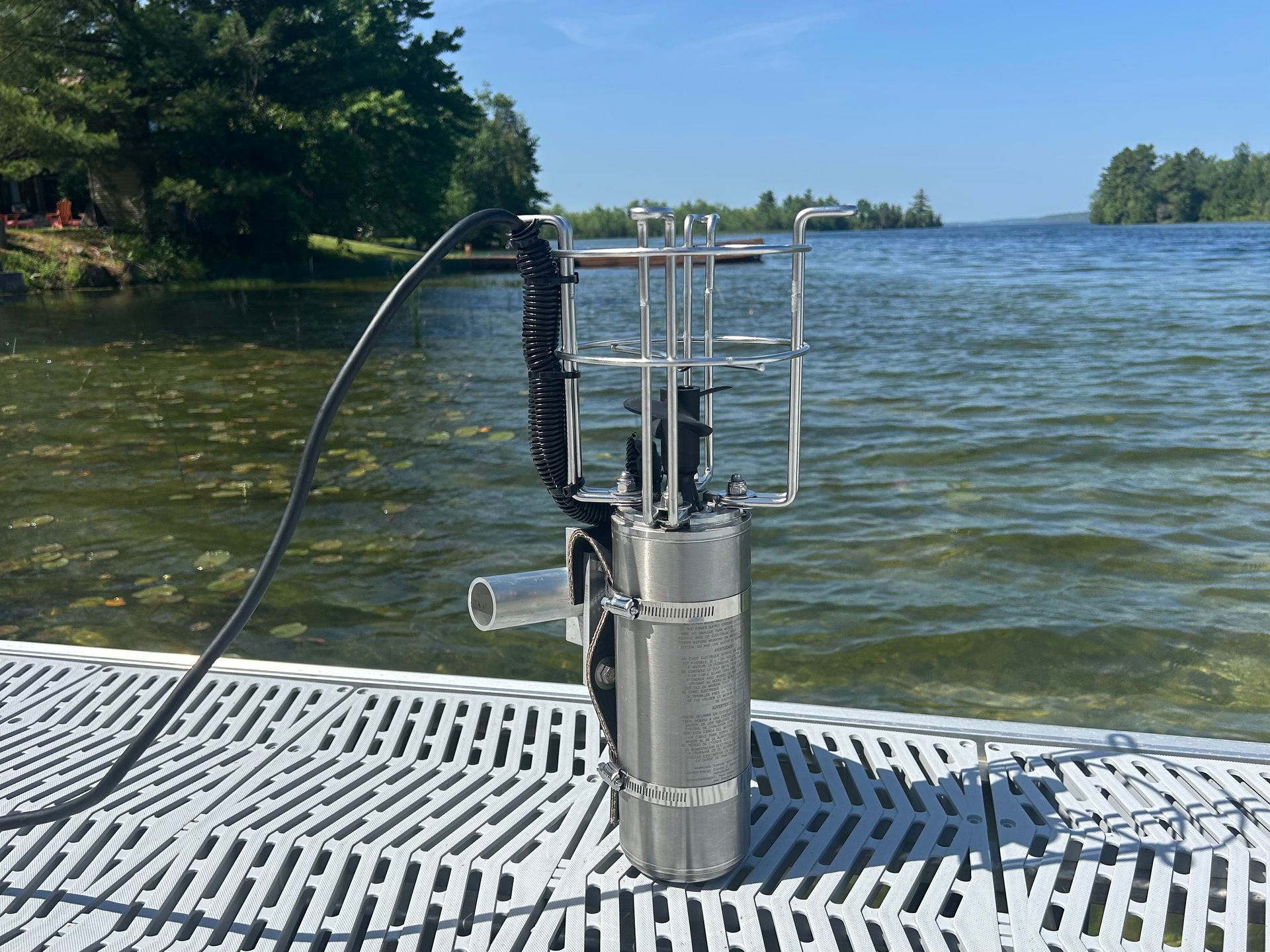
An Arbrux de-icer uses a high-speed propeller to bring warmer water from below up to the surface, keeping a circle of open water up to 40 feet across. That opening lets the pond trade gases with the air again, and the moving water helps mix the pond around it.
Keeping part of the surface ice-free is one of the main steps pond specialists recommend against winterkill. A de-icer is not a guarantee in every pond and every winter, but it gives your fish a working connection to the air when they need it most.
Setting one up in a pond
- Find the depth. The pump works best 4 to 6 feet down. Many farm ponds are shallower than they look, so measure before you choose a spot. If you are working with less water, read Do Dock De-Icers Work in Shallow Water?
- Choose a mount. Most ponds have no dock to hang from. The free-standing Lake Bottom Bundle sits on the bottom and angles the pump where you need it.
- Plan the power. Run it from a ground fault protected outdoor circuit installed by a licensed electrician. Pick a 25, 50 or 100 foot cable that reaches without strain.
- Start it as ice begins to form. Opening water is much easier before the pond seals over than after.
Other steps that help
- Clear some snow, safely. Pond specialists suggest keeping roughly a third of the ice free of lasting snow so light can reach the plants. Only go out once the ice is thick enough to hold you, and never near the open water.
- Cut down the muck. Rake out leaves in the fall and keep summer weeds in check. Run as a circulator in summer, the same Arbrux pump helps keep water moving and clears a 60-foot diameter of bottom. Our post on lake muck around your dock explains how.
- Stock to suit the pond. More fish means more oxygen used every winter day.
Keep everyone safe around open water
An open patch on a frozen pond is easy to miss under fresh snow. Post clear signs, fence it off if children, pets or livestock are nearby, and make sure everyone at home knows where it is.
Give your fish a better winter
Your fish live on the oxygen in the pond until ice-out. A Canadian-made Arbrux de-icer, covered by a 2-year warranty, helps keep that supply open. Send us your pond's size and depth and we will help you plan a setup.